Address
30 N Gould St.
Suite R, Sheridan, WY 82801, USA

How Long Does Semaglutide Stay in Your System? Understanding Duration, Detection, and Effects

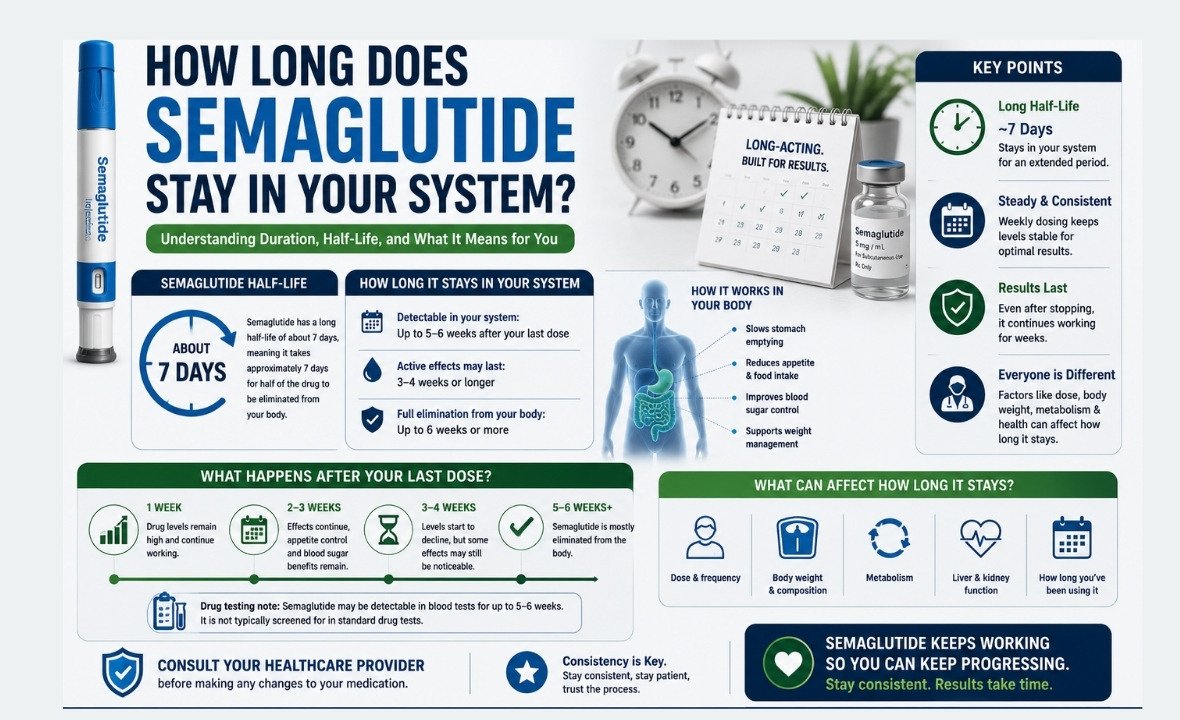
You can expect semaglutide to stay in your body for about 5 to 7 weeks after your last dose because its half-life is roughly one week. Most of the drug clears gradually over several weeks, so effects and side effects fade slowly rather than immediately.
If you worry about tests, pregnancy planning, stopping treatment, or side effects, this timeline matters. The exact time can change based on your dose, metabolism, kidney and liver health, and other medicines you take, so your situation may differ from the typical range.
Key Takeaways
- Semaglutide usually takes about 5–7 weeks to clear from the body.
- Individual health and other drugs can speed up or slow clearance.
- Expect a gradual taper of effects and side effects over weeks.
Metabolism and Elimination Process
Semaglutide is absorbed slowly, stays active for days, and leaves the body over several weeks. Its movement through your body depends on how it’s given, how your tissues handle it, and how your liver and kidneys clear it.
Absorption Pathway
If you get semaglutide as a once-weekly injection (like Ozempic or Wegovy), the drug enters the subcutaneous tissue under your skin. From there, it slowly moves into the bloodstream over hours to days. The drug’s design makes this slow uptake predictable: a steady rise in blood levels after each injection leads to a roughly seven-day half-life on average.
Oral semaglutide (Rybelsus) uses an absorption enhancer to pass through the stomach and small intestine. Fasting or taking it with food changes how much you absorb, so following dosing instructions matters for consistent blood levels.
How the Body Breaks Down Semaglutide
Semaglutide is a modified peptide that resists rapid breakdown by enzymes. Your body still fragments it through normal protein-degrading pathways, mainly by proteolytic enzymes in tissues and blood. These enzymes cut the molecule into small peptides and amino acids.
Binding to albumin in your blood slows breakdown and extends activity. That albumin binding is a key reason for the long half-life. Variations in enzyme activity, body weight, and other medications can change how quickly you break down semaglutide, but changes are usually modest for most people.
Routes of Excretion
After enzymatic breakdown, the peptide fragments and metabolites leave your body primarily via the kidneys. Small peptide fragments and amino acids are filtered and excreted in urine. The liver also plays a role by processing some fragments and routing them to bile or blood for further elimination.
Because kidney and liver function affect clearance, people with reduced renal or hepatic function may clear the drug more slowly. Routine drug tests rarely measure semaglutide because it’s a peptide and not commonly screened, but clinical or toxicology labs can detect residues if specifically tested.
Biological Half-Life and Detection Windows
Semaglutide stays in your body for weeks after a dose. How long it shows up in blood, urine, or saliva depends on its week-long half-life, how often you take it, and your kidney or liver health.
Average Duration in Blood Plasma
Semaglutide has an average elimination half-life of about 7 days. That means every week the active level drops by roughly half. After about 4–5 half-lives (roughly 4–5 weeks), plasma levels fall to very low or undetectable amounts for most people.
Steady state occurs if you take weekly doses; blood levels build up over 4–5 weeks and then reach a consistent range. Individual factors change this: lower kidney function, body weight, or interactions with other drugs can slow clearance and extend plasma presence by days to weeks.
Urine and Saliva Presence
Semaglutide is a large peptide and is primarily measured in plasma, not routinely in urine or saliva. Standard drug screens for small-molecule drugs usually will not detect semaglutide. Specialized lab tests using immunoassays or mass spectrometry are required to find it in bodily fluids.
If testing targets semaglutide specifically, urine or saliva detection windows roughly mirror plasma trends but are less consistent. Expect detection for several weeks after the last dose when sensitive assays are used. Normal clinical settings rarely test urine or saliva for this drug.
Impact of Dose Frequency
Taking semaglutide weekly creates a buildup until steady state at about 4–5 weeks. If you skip a dose once, plasma levels fall somewhat but rebound when you resume weekly dosing. Missing multiple doses will reduce levels more quickly and shorten the detection window.
Higher or more frequent dosing (beyond approved weekly schedules) would raise steady-state levels and extend how long the drug is detectable. Conversely, a single dose will clear faster than ongoing weekly dosing. Your doctor may adjust timing for surgery or testing based on these effects.
Individual Factors Affecting Duration
Age, kidney and liver health, and body size each change how long semaglutide stays active. These factors affect how fast your body breaks down and clears the drug.
Age and Metabolic Rate
As you get older, your metabolism usually slows. A slower metabolic rate can reduce how quickly your body breaks down semaglutide, so the drug may linger longer after your last dose.
Older adults often have changes in body composition too, such as less muscle and more fat. That shift can alter drug distribution and clearance, subtly extending the time semaglutide remains at measurable levels.
If you are elderly, clinicians may monitor you more closely for prolonged effects or side effects. They may adjust follow-up timing rather than the usual five-week expectation for complete clearance.
Kidney and Liver Function
Your kidneys and liver play key roles in drug processing and removal. Semaglutide is mainly broken down into small pieces by body tissues, then eliminated; impaired liver or kidney function can slow that path.
If you have moderate to severe kidney or liver disease, semaglutide can stay in your system longer and its effects may be stronger or last beyond the typical timeline. Your healthcare provider may check labs or lower follow-up frequency to watch for prolonged action.
Tell your provider about any chronic kidney or liver conditions before starting or stopping semaglutide. They can give specific guidance on monitoring and timing for surgery, other drugs, or pregnancy planning.
Body Weight and Composition
Your total body weight and how much fat versus muscle you have affect drug distribution. Semaglutide binds differently across tissues; higher body fat can change its apparent volume of distribution and slow elimination.
If you weigh more, a larger dose or longer presence may occur compared with a smaller person, though standard dosing already considers typical weight ranges. Rapid weight loss while on semaglutide can also change how the drug behaves and how long it clears.
Discuss dosing and expected duration with your prescriber if your weight changes significantly during treatment. They can advise whether timing for stopping or spacing doses needs adjustment.
Drug Interactions and Concurrent Medications
Semaglutide can change how some drugs act in your body because it slows stomach emptying and lowers blood sugar. Some diabetes medicines and common prescriptions need dose adjustments or closer monitoring when you start or stop semaglutide.
Effects of Other Diabetes Medications
If you take insulin or sulfonylureas (like glipizide, glyburide), semaglutide can increase your risk of low blood sugar. You may need to lower your insulin or sulfonylurea dose when your provider starts semaglutide. Monitor your glucose often for the first few weeks and any time doses change.
Metformin generally works well with semaglutide and usually needs no change, but watch for nausea or GI effects that could reduce your eating and glucose levels. DPP-4 inhibitors add little benefit and are rarely combined. SGLT2 inhibitors can be used together, but watch for dehydration or kidney changes if you lose weight quickly.
Influence of Common Prescription Drugs
Semaglutide delays gastric emptying, so drugs taken by mouth that need fast absorption can act differently. Take critical oral meds (like antibiotics, thyroid pills, or birth control) at times your clinician recommends. For drugs with narrow therapeutic windows — such as warfarin, phenytoin, or anticonvulsants — get closer blood level or INR checks after starting or stopping semaglutide.
There are few direct pharmacokinetic drug–drug interactions because semaglutide is a peptide and not metabolized by liver CYP enzymes. Still, monitor drugs that affect blood pressure, heart rate, or kidney function (ACE inhibitors, beta-blockers, diuretics). Tell every clinician and pharmacist you use semaglutide so they can check dosing and monitoring needs.
Long-Term Effects of Semaglutide Retention
Semaglutide can stay in your body for several weeks after stopping. This can affect dosing plans, side effects, and safety checks like pregnancy planning or surgery.
Potential for Accumulation
Semaglutide has a half-life around seven days, so steady-state levels develop after several weekly doses. If you take the drug weekly, small amounts can accumulate until input and elimination balance. That means blood levels rise over the first few weeks and then stay fairly steady while you continue treatment.
Kidney and liver function affect how quickly the drug clears. Impaired clearance can raise levels more than expected and increase exposure over time. Age, body weight, and interactions with other drugs may also change how much semaglutide builds up. Talk with your prescriber if you have kidney or liver disease, are older, or take multiple medicines that could affect metabolism.
Implications for Safety and Side Effects
Because semaglutide lingers, side effects like nausea, constipation, or low appetite may continue for weeks after your last dose. If you stop treatment, expect symptom reduction gradually over about four to five weeks for most people, not instantly.
Longer retention can matter for serious risks. If you plan pregnancy or surgery, providers often wait several weeks after stopping to lower fetal exposure or bleeding risks. Rare but serious effects — for example, pancreatitis or gallbladder issues — may need monitoring even after you stop the drug. Always report new abdominal pain, severe vomiting, or jaundice right away.
If side effects are severe or persistent, your clinician may lower the dose, pause treatment, or switch therapies. Keep follow-up appointments and lab checks as advised to track safety while semaglutide leaves your system.
Clinical Implications for Discontinuation
When you stop semaglutide, the drug declines slowly because of its long half-life. Expect measurable drug levels for about 4–7 weeks after the last dose, so effects do not end immediately.
Appetite suppression and weight loss benefits often lessen over weeks. You may notice increased hunger and gradual weight regain without active lifestyle or medical support.
If you take semaglutide for diabetes, blood glucose control can change as the drug clears. Monitor your blood sugar more closely and adjust other diabetes medicines with your clinician to avoid high or low readings.
Stopping before surgery or pregnancy requires planning. Tell your surgeon or obstetrician well before procedures or conception so they can advise timing and risks based on the weeks it can remain in your system.
Common side effects like nausea or GI upset usually improve after the drug clears. Rare but serious adverse effects may need longer follow-up, so report new or worsening symptoms promptly.
Practical steps to discuss with your provider:
- Medication plan: how and when to stop, substitute, or taper.
- Monitoring: blood glucose checks, weight tracking, and symptom logging.
- Support: nutrition, exercise, and possible alternative therapies.
Follow medical advice closely when discontinuing to manage symptoms and reduce risks linked to the drug’s prolonged presence in your body.
Considerations for Special Populations
Semaglutide stays in the body for several weeks and may act differently depending on age, kidney function, and use in children. You should know how these factors can change dosing, side effects, and monitoring needs.
Elderly Patients
Older adults often clear drugs more slowly. You may experience longer semaglutide exposure because age can reduce kidney and liver function even if tests look normal.
Start at lower doses and increase slowly if you and your clinician decide to continue. Watch for dehydration, low blood sugar (if you also take insulin or sulfonylureas), nausea, dizziness, and falls. Monitor weight loss closely; unintended loss can harm frail patients. Review other medicines for interactions and consider more frequent follow-up for symptoms and labs.
Renal Impairment
Kidney disease can change how long semaglutide stays in your system, though the drug is mostly processed outside the kidneys. Patients with mild to moderate impairment usually do not need dose changes.
If you have severe renal impairment or are on dialysis, report nausea, vomiting, or decreased fluid intake right away. These can worsen kidney function and raise the risk of dehydration and acute kidney injury. Your clinician may monitor kidney tests more often and adjust other diabetes drugs that affect kidney function or blood sugar.
Pediatric Use
Semaglutide is not commonly used in children except in specific, approved cases. If your child is prescribed semaglutide, the drug’s long half-life means effects and side effects can last for weeks after stopping.
Dosing must follow pediatric guidelines and specialist advice. Watch for slowed growth, changes in appetite, stomach pain, or mood changes. Ensure careful medical follow-up, growth measurements, and coordination with pediatric endocrinology before starting, adjusting, or stopping therapy.
Monitoring and Testing for Semaglutide Levels
You usually do not need routine blood tests just to check semaglutide levels. The drug has a long half-life (about seven days) and clears slowly, so most clinical decisions rely on symptoms, blood glucose, and weight changes instead of direct drug measurements.
If measuring levels matters—for research, rare drug-interaction checks, or sports testing—laboratories use specialized assays like mass spectrometry. These tests are not widely available and can be costly. Ask your provider if a specific test is needed and where to get it.
Common lab tests you might have while on semaglutide include:
- Blood glucose and A1c to track diabetes control.
- Kidney and liver panels to monitor organ function.
- Electrolytes if you have vomiting or dehydration from side effects.
Expect semaglutide to remain detectable for about 4–7 weeks after stopping, depending on dose and metabolism. This affects timing for any planned drug-screening or switching medications. Your doctor will consider this window when advising on pregnancy planning, surgery, or starting other therapies.
Talk with your clinician about the purpose of testing. They will weigh benefits, test availability, and cost before ordering any specialized semaglutide assay.
Frequently Asked Questions
Semaglutide usually clears the body over several weeks. How long depends on the dose form, half-life, and your health.
How long does it take for semaglutide to leave your body after the last dose?
Semaglutide has an average half-life of about 7 days. That means most of the drug is gone after about 4–5 weeks (roughly five half-lives).
Individual clearance varies, so some small amounts might be detectable a bit longer in some people. Side effects often ease sooner than the drug is fully cleared.
How long do common Ozempic doses (0.5 mg or 2.5 mg) remain in the body?
Ozempic contains semaglutide with the same roughly 7-day half-life regardless of dose. Both 0.5 mg and 2.5 mg follow the same elimination pattern.
Higher doses mean more total drug in your body, so it may take the same number of half-lives but start from a higher level. Expect about 4–5 weeks for most of the dose to clear.
How long does Rybelsus remain in your system after stopping?
Rybelsus is an oral form of semaglutide and also has a similar half-life of around 7 days. You should expect a similar 4–5 week washout for most of the drug.
Because absorption can differ with oral dosing, the time to reach steady state may vary, but elimination after stopping is still driven by that ~7-day half-life.
How long does a GLP-1 medication stay in your system once you discontinue it?
Different GLP-1 drugs have different half-lives. Semaglutide (Ozempic, Wegovy, Rybelsus) is long-acting at about 7 days. Shorter-acting GLP-1s clear in hours to a day.
Check the specific medication’s half-life and prescribing information to know the expected washout for that drug.
What factors can make semaglutide stay in your system longer or shorter?
Kidney or liver problems can slow drug clearance and lengthen the washout. Older age, body composition, and interactions with other drugs may also change how long it stays.
Dose size and how long you used the medication affect starting levels and how long low amounts persist. Laboratory detection methods and sensitivity also affect how long it’s detectable.
Can you speed up how quickly semaglutide leaves your system, and if so, how?
No proven method reliably speeds elimination of semaglutide. Stopping the drug is the primary way to let your body clear it naturally.
Hydration, diet, or supplements do not meaningfully change semaglutide’s half-life. If you need the drug cleared for medical reasons, talk to your clinician for advice.