Address
30 N Gould St.
Suite R, Sheridan, WY 82801, USA

How to Maximize Results on Semaglutide or Tirzepatide: Evidence-Based Strategies

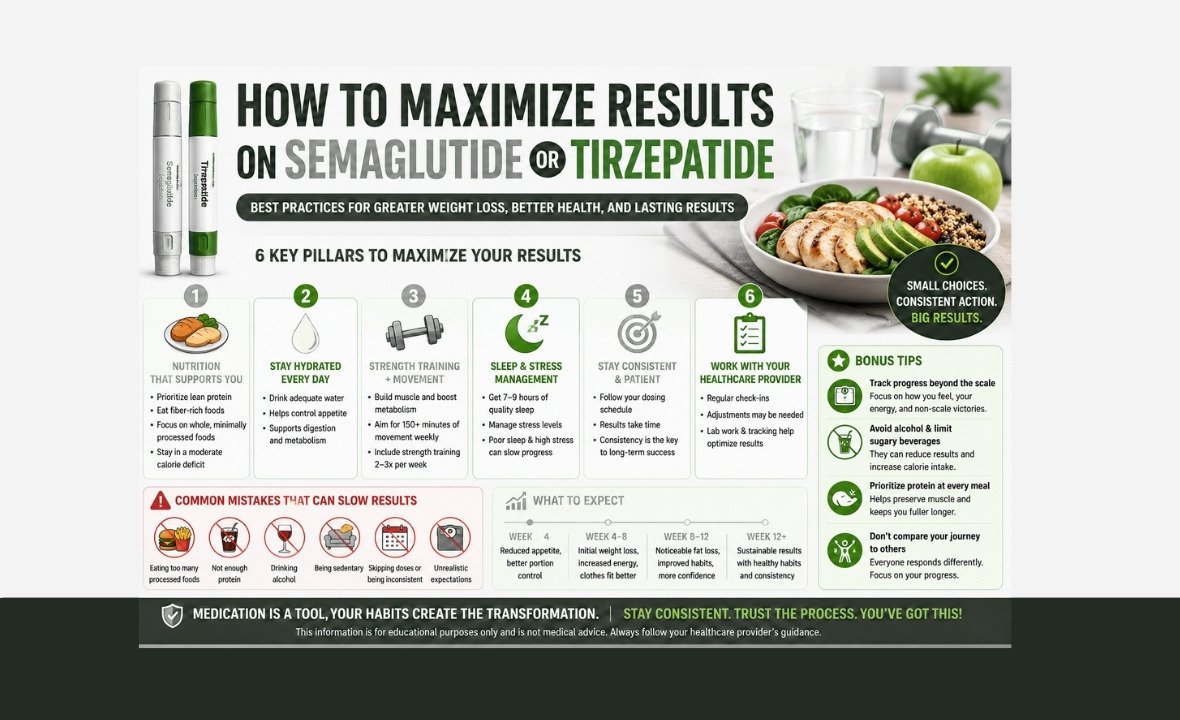
You’ll get more from semaglutide or tirzepatide when you pair the medicine with clear habits. That means the right dose and timing, good hydration, enough protein, regular movement, and some honest tracking to see what’s working for you.
Focus on practical steps and small daily choices—these speed up progress, cut side effects, and help keep the weight off for good.
This post will lay out straightforward ways to set up your dosing and meals. You’ll find tips for handling side effects, tracking progress, and staying motivated so you use these medications safely and actually see results.
Expect simple tactics you can try today and a few tools to help you stay on course.
Key Takeaways
- Use the medication with simple lifestyle habits to boost results.
- Watch symptoms and adjust habits to reduce side effects and stay consistent.
- Track progress and get support to maintain gains over time.
Understanding Semaglutide and Tirzepatide
These drugs change appetite, blood sugar, and digestion to help you lose weight and improve diabetes control. They act on gut and brain signals, and each has its own targets, dosing, and side-effect patterns you’ll want to know about.
Mechanism of Action
Semaglutide mimics a gut hormone called GLP‑1. It binds to the GLP‑1 receptor in your pancreas, brain, and gut, raising insulin after meals, lowering glucagon, slowing stomach emptying, and reducing appetite.
The result? Less hunger and smaller meals.
Tirzepatide activates two receptors: GLP‑1 and GIP. Adding GIP gives a stronger effect on insulin release and may boost weight loss more than GLP‑1 alone.
Tirzepatide also lowers hunger and slows digestion. Its dual action can change how quickly you lose weight and how your blood sugar responds.
Both drugs work systemically after a once‑weekly injection. You’ll probably notice appetite drops first, then steady weight loss and better glucose control over weeks to months.
FDA-Approved Uses
Semaglutide has approvals for Type 2 diabetes (lower-dose) and for chronic weight management (higher dose). Doctors use it to lower A1c, help with weight loss, and reduce some cardiovascular risks.
Tirzepatide is approved for Type 2 diabetes and, in many places, for weight management after trials showed larger average weight loss. Clinicians turn to it when lifestyle changes alone aren’t enough.
Insurance coverage and labeling differ by use and dose. You’ve got to follow the specific product’s dosing schedule and use the right formulation for diabetes or weight loss.
Differences Between the Medications
Semaglutide targets GLP‑1 only. Tirzepatide targets both GLP‑1 and GIP, and that dual action often means bigger average weight loss and faster glucose lowering in head‑to‑head trials.
Dosing and formulations aren’t the same. Semaglutide comes in diabetes and weight-loss versions with set escalation schedules. Tirzepatide uses weekly injections too, but with its own steps. If you need to switch between them, get a clinician’s help for dose conversion and monitoring.
Side effects overlap—nausea, vomiting, diarrhea, constipation—but timing and frequency vary. Some people just tolerate one drug better than the other. Cost, availability, and insurance may also decide which you can get.
Establishing the Right Dosage and Schedule
Start low and go slow based on your tolerance and weight-loss goals. Track side effects, keep a log of dose dates, and jot down notes to share with your clinician.
Titration Guidelines
Begin with a low dose to lower the chance of nausea and other GI side effects. With semaglutide, most clinicians start at 0.25 mg weekly for four weeks, then double every 4 weeks until you hit your target (usually 2.4 mg weekly for weight loss).
For tirzepatide, typical starts are 2.5 mg weekly, increasing every 4 weeks up to your maintenance dose. If side effects hit, pause escalation or drop back one dose for 2–4 weeks.
Use a basic checklist: dose start date, dose increases, symptoms, and daily food intake. Track weight weekly and watch for plateaus; sometimes you need a small dose adjustment or a longer stay at an intermediate dose.
Don’t change your injectable dose on your own if you have diabetes or other major health issues. Adjustments are different if you take oral semaglutide (Rybelsus) or have kidney/liver problems.
Timing Considerations
Take weekly injectables on the same day each week to keep drug levels steady. Pick a day that fits your routine and set a phone reminder.
You can inject at any time of day, with or without food, unless your provider says otherwise. If you miss a dose by more than 48 hours, reach out to your provider—don’t double up.
For oral semaglutide, follow the fasting rules: take it on an empty stomach with no more than 4 oz water, then wait 30 minutes before eating.
Plan dose increases for times when you can manage side effects—don’t start a new dose right before travel or a big event. Coordinate dosing with other meds and watch for interactions, especially with diabetes drugs and blood thinners.
Consulting with Your Healthcare Provider
Bring clear data to each visit: recent weights, side effects, appetite changes, and a list of all meds and supplements. Show your dose log or screenshots from an app so your clinician can make specific, safe changes.
Ask targeted questions like, “Should I pause escalation if nausea lasts more than two weeks?” or “How should we adjust insulin when I increase dose?”
If you have heart disease, a history of pancreatitis, pregnancy plans, or severe kidney/liver issues, get specialists involved early. Ask for written instructions on when to stop medication before procedures and how to restart after.
Optimizing Nutrition and Diet
Zero in on protein, veggies, and portion control. Stick to whole foods, time meals around activity, and keep your plan simple enough to follow most days.
Macronutrient Balance
Go for a higher-protein approach to protect muscle while you lose weight. Aim for about 25–35% of your calories from protein, or roughly 0.6–0.9 grams per pound of body weight daily, depending on how active you are.
Spread protein across meals—20–30 grams per meal keeps you full and helps preserve lean mass. Get carbs mainly from veggies, whole grains, and legumes. Limit refined carbs and sugary drinks that mess with appetite control.
Include healthy fats (olive oil, nuts, avocado) for satiety and nutrient absorption, about 25–35% of calories.
Portion Control Strategies
Use simple tools: a food scale, measuring cups, or your hand as a guide. Protein = palm-sized per meal. Veggies = two cupped handfuls. Carbs = one cupped handful. Fats = thumb-sized.
Plan meals and pack snacks so you’re not caught off guard when appetite shifts. Eat slowly and stop when you’re comfortable, not stuffed. Track portions for a week or two to learn your typical intake, then adjust to a steady calorie deficit of 10–20% if your provider says it’s okay.
Recommended Foods
Focus on lean proteins: chicken breast, turkey, fish, tofu, Greek yogurt, and eggs. These help with muscle and satiety. Go heavy on high-fiber veggies: broccoli, spinach, peppers, Brussels sprouts—they add volume without many calories.
Pick whole grains and legumes for steady energy: quinoa, oats, lentils, beans. Cut down on white bread, pastries, and sugary cereals. For fats, use olive oil, walnuts, chia seeds, and avocado in small amounts.
Quick checklist:
- Protein each meal (20–30 g)
- Veggies with every meal (2 cupped handfuls)
- Whole grains/legumes 1–2 portions daily
- Keep added sugars low and hydrate with water
Try to time food around workouts: eat protein within 1–2 hours after strength training to help recovery.
Incorporating Physical Activity
Pair your medication with regular movement—cardio, strength, and flexibility. Go for workouts that protect muscle, improve fitness, and actually fit into your weekly routine.
Types of Effective Exercise
Focus on three types: aerobic, resistance, and mobility work. For aerobic (cardio), try brisk walking, cycling, swimming, or group fitness for 30–60 minutes most days. Pick what you’ll actually do and build up intensity slowly.
For resistance (strength), use bodyweight, bands, or weight machines 2–4 times per week. Hit major muscle groups with 2–4 sets of 8–15 reps. Keep your form solid to avoid injury.
Mobility and balance matter too—stretching, yoga, or tai chi 2–3 times weekly helps reduce stiffness and keeps you moving well.
Mix up the types during the week. Maybe combine a cardio day with a short strength session, or follow a strength day with gentle mobility work to recover.
Frequency and Intensity
Shoot for at least 150 minutes of moderate aerobic activity or 75 minutes of vigorous activity a week. Break it up into 20–40 minute sessions if that’s easier.
For strength, get in 2–4 sessions weekly with at least 48 hours between working the same muscle group. Start light and add weight as you get stronger.
Use simple intensity checks: the talk test (you can speak but not sing during moderate effort) or rate of perceived exertion (5–7 out of 10 for moderate, 8–9 for vigorous). Ramp up duration or intensity slowly—maybe 10% per week—to avoid injury.
Monitoring Progress
Track weight, body measurements, and strength—not just what the scale says.
- Keep a weekly weight log and monthly tape measurements of waist and hips.
- Record reps, sets, and weights for strength workouts to spot progress.
- Track aerobic fitness by time, distance, or perceived effort for the same route or workout.
Watch for muscle loss, fatigue, or a rising resting heart rate; those can mean overtraining or not eating enough. If you have medical issues, check progress with your clinician and adjust plans based on labs or symptoms.
Managing Side Effects
You can lower most side effects with slow dose changes, food choices, and simple habits. Watch for serious signs—fast heartbeat, severe belly pain, trouble breathing—and get help right away.
Preventing Nausea and Gastrointestinal Issues
Start with very gradual dosing and stick to your prescriber’s titration schedule. If you feel queasy after an injection, try eating small, plain meals—toast, bananas, rice—and steer clear of greasy or spicy foods for a while.
Drink water throughout the day. Take sips before, during, and after meals instead of gulping big amounts at once; that usually helps keep your stomach calm.
Pick a medication time that fits your routine. Some folks do better in the morning, others at night.
If reflux or constipation shows up, add fiber slowly and move around more—short walks after meals can really help digestion.
Keep a symptom log. Jot down what you ate, when you took your dose, and how you felt; share this with your clinician so they can tweak your plan or suggest anti-nausea meds if needed.
Recognizing Allergic or Adverse Reactions
Watch for rash, hives, swelling of your face or throat, or sudden trouble breathing. These could mean an allergic reaction and you should get emergency help right away.
Keep an eye out for severe stomach pain, ongoing vomiting, high fever, or yellowing skin or eyes. These might signal pancreatitis or liver issues, so don’t wait to get checked out.
If you feel dizzy, faint, or unusually weak, keep tabs on your heart rate and blood pressure. Tell your provider immediately if you notice new or severe mood changes, suicidal thoughts, or sudden vision changes.
Carry a list of your current meds. Drug interactions or preexisting conditions can raise your risk, so tell your provider about any thyroid, gallbladder, or kidney issues before starting treatment.
When to Seek Medical Advice
Contact your prescriber if nausea hangs on for more than a week despite diet tweaks, or if you lose over 5% of your body weight in a month without meaning to. Your clinician might slow the titration or prescribe anti-nausea meds for a bit.
Call emergency services if you have breathing trouble, severe swelling, fainting, or chest pain. For persistent vomiting, severe abdominal pain, high fever, or yellow skin/eyes, head to urgent care.
Book a same-week appointment if you’re dealing with recurring dizziness, fainting, or new heart palpitations. Ask for blood tests if you notice worsening fatigue, dark urine, or odd bruising.
When you call, keep a list of your symptoms and when they started. Details help clinicians decide if you need a dose change, a different drug, or immediate tests.
Monitoring Progress and Setting Realistic Goals
Track clear signs of change and set goals that fit your health needs and the medication’s timeline. Focus on weight, measurements, labs, symptoms, and how you feel day to day.
Tracking Weight and Health Metrics
Weigh yourself once a week, same time and same scale, to spot real trends—not just daily fluctuations. Record weight, waist size, and body-fat estimates if you have a good device.
Keep tabs on these labs and vitals at the start and as your clinician suggests:
- A1C (if you have diabetes) every three months until things stabilize.
- Fasting glucose, lipids, and liver enzymes as recommended.
- Blood pressure and heart rate at home weekly, or more often if they’re off.
Log symptoms like nausea, constipation, or appetite changes and note how active and strong you feel. Use a table or app to compare weeks and months. Share these records with your provider to help guide dose changes or troubleshooting.
Adjusting Goals Over Time
Set both short-term and long-term goals tied to specific numbers or milestones. For example: “Lose 5% of body weight in three months” or “Lower A1C by 0.5% in 12 weeks.” Make your goals measurable and time-based.
If you hit a plateau after that initial weight loss, check your calorie intake, protein and fiber, sleep, stress, and exercise. Try small changes, like adding two 20-minute walks a week or swapping snacks for higher-protein choices.
Reassess goals every 4–12 weeks with your clinician. Change your targets if side effects force a dose change, if labs show a new concern, or if your health priorities shift—maybe you want to focus on strength or blood sugar instead of more weight loss.
Enhancing Motivation and Long-Term Adherence
You’ll get better results by building small habits you can repeat and by spotting stalls early, so you can adjust your behavior or treatment. Stick to daily routines, realistic goals, and regular check-ins with your care team.
Building Healthy Habits
Create a simple weekly plan with three to five actions you can actually do. For example: walk 20 minutes after lunch on Monday, Wednesday, and Friday; log two meals a day in an app; do two strength moves at home on Tuesday and Thursday. Use a calendar, alarm, or sticky note to remind yourself.
Track progress with one main metric, like weekly non-scale wins (energy, how your clothes fit) or minutes of activity. Celebrate small victories with nonfood rewards—a new book, a massage. Tell a friend or your clinician about your goals for accountability. Adjust habits every few weeks if they feel too tough or too easy.
Overcoming Plateaus
If your weight or glucose stalls, review your data for two to four weeks: calories, protein, steps, sleep, and medication timing. Usually, small tweaks work best. Try adding two 10-minute walks a day, swapping one processed snack for a protein-rich choice, or bumping up resistance training twice a week.
Talk to your prescriber before changing your dose or stopping medication. They’ll check for side effects, labs, and interactions. If behavior tweaks don’t help, ask about adjusting your dose or switching therapies. Keep tracking after any change so you know what’s actually working.
Addressing Medication Interactions and Contraindications
It’s important to know which drugs or health conditions could change how semaglutide or tirzepatide work, or raise safety risks. Always check your medicines and medical history before starting or changing doses.
Drug Interaction Risks
Both drugs slow stomach emptying, so oral drugs that need quick absorption might work less well. That includes some antibiotics, thyroid pills, and birth control. If you use oral contraceptives, consider a non-oral method or add a barrier method for at least four weeks after starting or after each dose increase of tirzepatide.
They rarely change liver enzymes, but other meds can still interact. Combining with other glucose-lowering drugs (like insulin or sulfonylureas) raises the risk of low blood sugar. Your clinician might lower those doses and ask you to check glucose more often. Always tell your provider about all prescriptions, supplements, and over-the-counter meds.
Pre-Existing Medical Conditions
Don’t use these drugs if you or your family has a history of medullary thyroid carcinoma or MEN2 syndrome. Rodent studies found thyroid C-cell tumors, so humans with that background should avoid the risk.
If you’ve had pancreatitis, gallbladder disease, or severe GI issues, talk through the risks. These meds can cause nausea, vomiting, and sometimes pancreatitis. Also, if you have serious kidney disease, dehydration from side effects could make things worse. Your clinician will check your labs and may suggest a different therapy or closer monitoring.
Lifestyle Adjustments for Lasting Success
Focus on habits that lower daily stress and improve your sleep. Tiny, steady changes here help keep appetite in check, support muscle, and make medication effects more consistent.
Stress Management Techniques
Stress bumps up cortisol, which can crank up your appetite and stall weight loss. Try deep breathing for five minutes twice a day to calm your nerves. The 4-4-4 method works: inhale four seconds, hold four, exhale four.
Build a quick daily routine to cut down on decision fatigue. Add a 20–30 minute activity you like—maybe brisk walking, light strength moves, or a hobby. These help lower stress and keep you moving without extra planning.
Track what stresses you out in a simple list. Jot down the time, the situation, and how you felt. Review weekly and pick one thing to tweak—maybe swap late-night screen time for a short walk to wind down.
Try short guided sessions, too. Use a 10-minute mindfulness or muscle relaxation app three times a week to boost focus and curb cravings.
Importance of Quality Sleep
Poor sleep messes with hunger hormones and leads to late-night snacking. Aim for seven to nine hours per night and keep your wake time within 30 minutes every day to keep your rhythm steady.
Set up a 30–60 minute wind-down routine. Dim the lights, put away devices, do some light stretching, or read a paper book. A regular routine tells your body it’s time to sleep.
Make your sleep space work for you. Keep it cool (around 65°F/18°C), block out light with blackout curtains, and use earplugs or white noise if you need. Save your bed for sleep—don’t work or eat there.
If you still can’t sleep after changing habits, talk to your provider about possible sleep disorders. Fixing sleep can make your meds and lifestyle changes work better.
Support Systems and Professional Guidance
You’ll see better results when you combine medication with real, ongoing support. The right professionals and peer networks help with dosing, side effects, meal ideas, and sticking to your plan.
Role of Health Coaches
Health coaches turn goals into daily habits. They review your food logs, suggest protein and hydration targets, and help set small activity goals that fit your life. Coaches usually check in weekly to track appetite, weight, and side effects so you and your prescriber can adjust things quickly.
Expect them to teach basics: meal timing, protein portions, label reading, and packing snacks for busy days. They also coordinate with your clinician if you have concerning symptoms like ongoing nausea or fast weight loss. Pick a coach who knows GLP-1 therapies and offers clear, measurable steps.
Community and Peer Support
Peer groups offer real-world tips and emotional support when things get tough. You can swap ideas—what foods keep others full, how people handled dose increases, or minor side effects. Find groups that focus on evidence, not miracle cures.
Try forums, local meetups, or app-based communities to share meal ideas, workout swaps, and grocery lists. Protect your privacy—don’t share medical records or exact doses publicly. If someone suggests a medical change, always double-check with your clinician first.
Frequently Asked Questions
These answers focus on practical steps you can actually use: how to start and adjust doses, which eating and exercise habits boost fat loss while keeping muscle, ways to ease stomach side effects, signs your medicine may need to change, and tips to avoid regain after stopping.
What dosage schedule is typically used when starting and titrating these medications?
For semaglutide (weight-dose form), you usually start at 0.25 mg once weekly for 4 weeks. After that, you bump up to 0.5 mg, and keep stepping up every 4 weeks to 1.0 mg, 1.7 mg, and then 2.4 mg if you need it.
Go slow—only increase if you’re handling the current dose without nasty side effects. Honestly, patience pays off here.
Tirzepatide often starts at 2.5 mg once weekly for 4 weeks. Then you move to 5 mg, then 7.5 mg, 10 mg, 12.5 mg, and up to 15 mg if you’re tolerating things well.
Stick to your prescriber’s plan, and if nausea or vomiting hit hard, pause the increases. No need to rush—your body will thank you.
Which nutrition habits most strongly support better weight-loss results while on treatment?
Try for a modest calorie deficit, around 300–500 calories less than usual per day. That’s enough for steady loss without feeling starved or cranky.
Lean on whole foods—think lean protein, veggies, whole grains, and healthy fats. They’ll keep you full and help protect muscle while you lose weight.
Get regular protein at each meal (aim for 20–30 g). This supports muscle and helps with satiety, so you’re less likely to snack later.
Cut back on sugary drinks, processed snacks, and big portions of refined carbs. Those can really undermine the medication’s benefit, honestly.
What types of exercise best complement treatment to improve fat loss and preserve muscle?
Mix resistance training 2–3 times a week with about 150 minutes of moderate aerobic activity. That combo gives you the best shot at losing fat while holding onto muscle.
Strength work can be bodyweight, bands, or weights—just hit the major muscle groups. You don’t have to get fancy; consistency matters more.
If you’re up for it, add short, higher-intensity intervals (once or twice a week) to boost calorie burn and fitness. Not everyone loves intervals, but they do help.
Keep workouts consistent and try to progress a little—more reps, a bit more weight, or longer sessions over time. Small steps make a difference.
How can gastrointestinal side effects be minimized without reducing effectiveness?
Start low and titrate slowly. That’s honestly your best bet to dodge nausea and vomiting.
Eat smaller, more frequent meals. Avoid super fatty or spicy foods, since those tend to trigger symptoms for a lot of people.
Stay hydrated. Stop eating when you first feel full—don’t push it.
If symptoms stick around, check in with your prescriber. Sometimes you need a slower titration, a dose break, or short-term anti-nausea meds.
What indicators suggest the medication is not working optimally and may need an adjustment?
If you don’t see any real weight change after 12–16 weeks at a solid dose, it’s probably time for a medication review. Rapid weight regain while still on injections is another red flag.
Severe side effects that won’t let up, out-of-control blood sugar (if you have diabetes), or anything that makes daily life rough—those are all signs to reassess dosing or maybe switch treatments. Definitely talk to your prescriber before making changes.
How can weight regain be reduced after stopping or spacing out injections?
Try to plan a gradual transition. Add more protein, drop calories just a bit, and ramp up resistance training before stopping the injections to help keep your lean mass intact.
Stick with regular check-ins with your clinician and dietitian. They’ll help you tweak your meals and give you that extra support when you need it.
If you’re thinking about spacing doses, only do it with your doctor’s advice. Keep up with good habits—steady sleep, stress management, and moving your body regularly—since these really help lower the risk of regaining weight too quickly.