Address
30 N Gould St.
Suite R, Sheridan, WY 82801, USA

Best Time of Day to Inject Semaglutide or Tirzepatide: Evidence-Based Timing and Practical Guidance

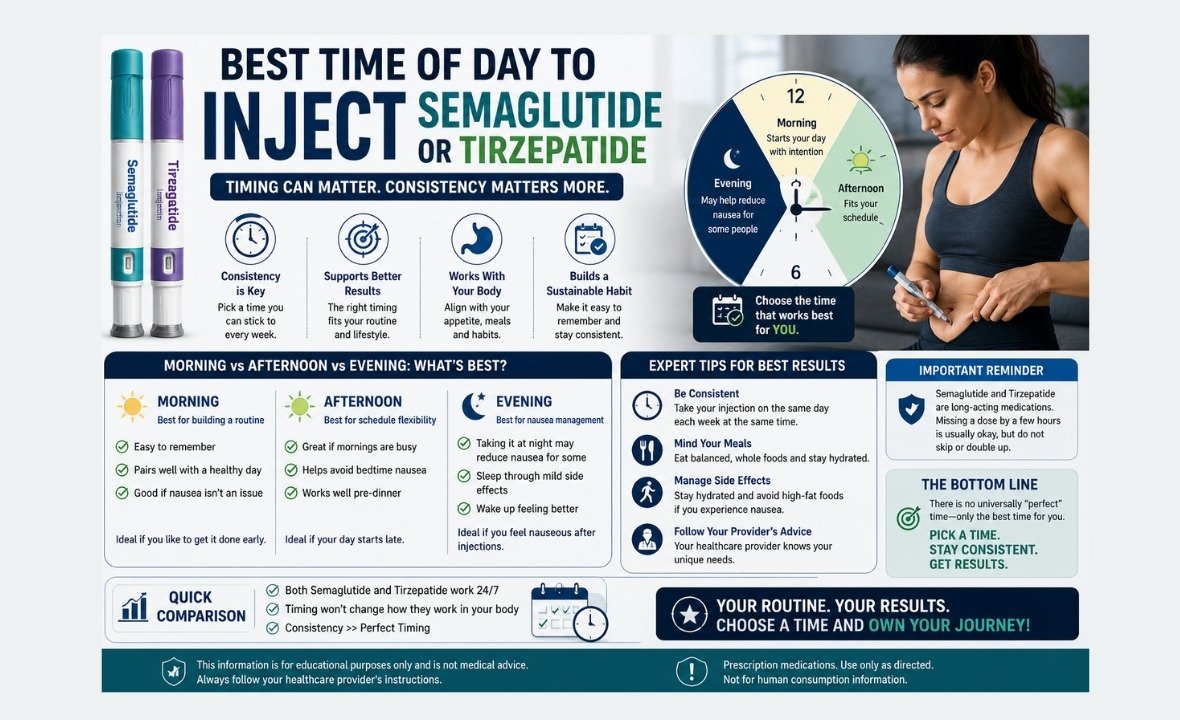
You can take semaglutide or tirzepatide at any time of day that you can stick with every week, but picking a consistent time that fits your schedule helps you manage side effects and build the habit. Choose a time that you can repeat each week and that lets you handle nausea or other side effects without disrupting your day.
If you prefer a routine, many people choose morning doses so they can monitor how they feel during the day, while others pick evening to sleep through mild side effects. You will learn how timing, side effects, and your daily routine can shape the best choice for your goals.
Key Takeaways
- Pick a consistent weekly time that fits your lifestyle.
- Timing rarely changes medication effectiveness, but it affects side-effect management.
- Personal factors and routine matter more than morning versus evening.
How Semaglutide and Tirzepatide Work
These drugs slow stomach emptying, change hunger signals in the brain, and raise insulin release when your blood sugar is high. They act over days to weeks, so timing a single weekly injection rarely changes their steady effect.
Mechanism of Action
Semaglutide mimics the GLP-1 hormone. When you inject it, it binds GLP-1 receptors in your pancreas and brain. In the pancreas it boosts insulin release only when glucose is elevated, which lowers high blood sugar but reduces hypoglycemia risk compared with insulin.
Tirzepatide activates both GIP and GLP-1 receptors. This dual action increases insulin release more than GLP-1 alone and also reduces appetite through brain pathways. Both drugs slow gastric emptying, which helps you feel full and reduces post-meal glucose spikes.
Differences in Drug Metabolism
Semaglutide and tirzepatide are peptides given as weekly injections. Your body breaks them down by normal protein-degrading enzymes and clears them slowly, giving each drug a long half-life. That long half-life is why weekly dosing keeps levels steady.
Tirzepatide and semaglutide differ in molecular size and structure, which changes how long they stay active and how they bind receptors. These differences affect dose escalation schedules and how quickly side effects like nausea appear or resolve for you. Neither drug requires dose timing with meals because of their prolonged activity.
Impact on Blood Sugar Regulation
Both drugs improve blood sugar control by increasing glucose-dependent insulin secretion and lowering glucagon release. That means when your glucose is high, your pancreas produces more insulin; when glucose is low, the insulin boost is limited. You get better average glucose (A1c) and fewer large post-meal spikes.
Because they reduce appetite and slow gastric emptying, you often eat less and absorb glucose more slowly. This helps lower fasting and post-prandial glucose. You still need to monitor blood sugar if you take other glucose-lowering drugs, since combined effects can raise your risk of low blood sugar.
Influence of Timing on Medication Effectiveness
Timing affects how you feel side effects, how easy it is to stick with doses, and how stable your blood sugar stays throughout the week. Weekly drugs keep steady blood levels, so exact hour matters less than being consistent and matching timing to your routine and symptoms.
Absorption Rates by Time of Day
Semaglutide and tirzepatide are long-acting molecules with slow absorption after a subcutaneous injection. Once injected, they reach steady concentrations over days, so the hour you inject has minimal impact on overall exposure.
If you inject after a heavy meal, local blood flow may be slightly higher, but this change does not meaningfully alter clinical effect. Skin temperature and exercise near the injection site can change absorption a little, so avoid hot baths or intense activity at the injection area for a short time.
You should rotate injection sites (abdomen, thigh, upper arm) to prevent tissue changes that could alter absorption. If you notice unusual swelling or lumps, talk to your clinician—those can affect how the drug is absorbed.
Consistency and Adherence
Weekly dosing works best when you pick a day and stick to it. Missing or delaying an injection by a few days usually won’t drop effectiveness dramatically, but repeated inconsistency can reduce benefits and confuse tracking.
Use a calendar reminder, phone alarm, or the pen’s dose-tracking app to keep your schedule. If you must change the day, inject as soon as you remember and then resume your chosen weekly day, following your prescriber’s instructions.
Consistency also helps you predict and manage side effects. When you inject at the same point in your week, you can plan for possible nausea or fatigue around dose starts or increases and avoid important events then.
Glycemic Control over 24 Hours
Because these drugs persist for a week, their glucose-lowering effect spans 24 hours without big daily peaks and troughs. You won’t need to time doses to meals to get steady fasting and post-meal control like you would with short-acting insulin.
If you use them with insulin or sulfonylureas, coordinate timing to reduce hypoglycemia risk. Your clinician may adjust other diabetes meds when starting or changing a GLP-1/GIP agonist to keep overnight and daytime glucose in target ranges.
Monitor blood sugar more closely during the first weeks and after dose changes. That data helps you and your clinician decide if a different weekly injection day or small adjustments to other medicines are needed.
Personalization: Factors That Affect Injection Scheduling
Your schedule, meals, and health conditions will shape the best time to inject. Small changes to when you inject can reduce side effects and fit the treatment into your life.
Lifestyle and Daily Routines
Think about fixed parts of your day you already do without thinking, like morning hygiene or bedtime. If you have a steady wake-up time, a weekly injection on that morning helps you remember. If you work nights or travel across time zones, pick a consistent local day of the week and use a reminder on your phone.
Consider when you have quiet time for self-care. If injections make you tired for a few hours, avoid scheduling them before important meetings, workouts, or driving. For busy parents, tying the shot to a weekly low-stress evening can be easier than mornings when you rush.
Meal Timing Considerations
Decide whether you want the injection near meals to manage nausea. Some people prefer injecting after breakfast to reduce morning sickness, while others inject in the evening after dinner to sleep through side effects. Try one option for a few weeks and note how your appetite and nausea respond.
If you use intermittent fasting or strict meal windows, avoid injecting just before long fasting periods if that worsens nausea or dizziness. Keep a simple log of injection time and meal timing for 2–4 weeks to spot patterns and adjust.
Coexisting Medical Conditions
Your other health issues can change the best injection time. If you have gastroparesis or chronic nausea, your clinician may suggest dosing that minimizes overlap with symptom peaks. If you take insulin or sulfonylureas, coordinate timing to reduce low blood sugar risk and discuss any dose changes with your provider.
For sleep disorders, injecting close to bedtime may worsen insomnia for some people; in that case, move the weekly dose to a daytime slot. Always tell your prescribing clinician about all medications, kidney or liver disease, and pregnancy plans so they can recommend a safe schedule.
Comparing Results: Morning vs. Evening Injections
Morning injections can help reduce daytime appetite and fit into a morning routine. Evening injections may lower daytime nausea for some people and fit better with weekly scheduling.
Patient Experiences and Clinical Findings
Many patients report small differences in appetite control depending on timing. People who inject weekly semaglutide or tirzepatide in the morning often say they feel less hungry during daytime meals. Clinical notes show consistency of the weekly dose matters more than exact hour; drug levels remain steady across a 2–3 day window, so skipping a day or shifting a weekday rarely cuts effectiveness.
Other patients prefer evening dosing because nausea or mild GI upset can be less disruptive overnight. Trials and real-world reports do not show large differences in weight loss or glucose control between morning and evening for weekly agents. Work with your clinician if side effects push you to change timing.
Impact on Energy Levels
If you inject in the morning, you might notice reduced hunger and steadier blood sugar through midday, which can help concentration and energy for work or school. Some people say morning dosing makes them feel slightly more alert during the first half of the day.
Evening dosing can prevent daytime nausea and keep mornings free for eating or exercise. A minority report mild fatigue after injections; that effect often fades within days to weeks. Track your energy and mood for two weeks after a timing change, and record when symptoms appear to decide which slot fits your routine.
Managing Common Side Effects
Expect stomach upset, sleep changes, and nausea early on. Small, practical steps can cut intensity and help you stay on treatment.
Minimizing Gastrointestinal Discomfort
Start doses slowly and follow your prescriber’s schedule. Increasing dose gradually gives your gut time to adapt and lowers the chance of severe cramps, bloating, or diarrhea.
Eat smaller, more frequent meals and choose bland, low-fat foods like plain rice, bananas, toast, and boiled potatoes. Avoid greasy, spicy, and very sugary foods for a few hours after dosing. Stay hydrated; sip water or clear broth throughout the day to replace fluids lost to vomiting or diarrhea.
Track which foods trigger symptoms and keep a simple food log for two weeks. If constipation occurs, add fiber gradually (oats, apples, psyllium) and drink more water. Talk to your clinician before using laxatives or antidiarrheal drugs.
Sleep Quality and Timing
If injections disturb your sleep, adjust timing to when you feel least likely to be woken by side effects. Many people inject in the morning to avoid nighttime nausea, but evening dosing can work if it fits your routine.
Keep a consistent bedtime and wind down 30–60 minutes before sleep. Avoid heavy meals and caffeine close to bedtime, as both can worsen reflux or indigestion that interrupts sleep. Use a notebook or phone app to note nights with poor sleep and any link to dose timing.
If daytime drowsiness becomes a problem, schedule activities requiring focus for earlier in the day. Discuss persistent insomnia or excessive sleepiness with your clinician — they can check for interactions with other drugs or suggest timing shifts.
Strategies for Reducing Nausea
Take your dose with a light snack if your prescriber allows oral forms; for injectables, timing with your routine can help. Eating plain crackers or a piece of fruit before or after dosing often eases early nausea.
Try these practical tips:
- Antiemetic options: Ask your clinician about short-term medicines like ondansetron or metoclopramide if nausea is moderate to severe.
- Ginger and peppermint: Ginger tea, chews, or peppermint lozenges can soothe mild nausea.
- Slow posture changes: Stand up slowly after lying down to reduce lightheadedness that can worsen nausea.
If vomiting or severe nausea lasts more than 48 hours, seek medical advice. Your clinician may pause dose escalation, lower the dose, or recommend an alternative treatment.
Optimizing Long-Term Health Outcomes
Consistent dosing, tracking side effects, and pairing medication with lifestyle changes will have the biggest impact on long-term results. Small habits—like a fixed weekly day, a simple injection routine, and regular follow-up with your provider—matter more than the exact hour you inject.
Improving Medication Adherence
Pick one day of the week for weekly injections and set a reminder on your phone. If a dose is missed, follow your prescriber’s rules (semaglutide: often up to 5 days; tirzepatide: often up to 4 days), then return to your usual schedule to avoid confusion.
Store pens per label instructions and keep a spare in case of loss or damage. Use a pillbox-style calendar or an app that logs each injection so you can show patterns to your clinician. Bring notes on side effects, appetite changes, and glucose readings to appointments. That makes dose adjustments and support more precise.
Tell a partner or friend about your routine so they can help remind you. If cost or access causes skipped doses, discuss alternatives with your provider or pharmacist early.
Enhancing Weight Management Results
Use the medication as part of a structured plan that includes a realistic calorie target and progressive activity. Track weight weekly and food intake briefly—three days per week is enough to spot trends without burnout.
Focus on protein at meals and fiber-rich vegetables to help control appetite while preserving muscle. Add strength training twice weekly to reduce muscle loss during weight loss. If you see plateaus for 4–8 weeks, review your food log, activity, and any medications that affect weight with your clinician.
Monitor mood and sleep, because poor sleep or depression can blunt results. Adjust the plan based on measurable data (weight, waist, glucose, strength) rather than short-term feelings.
Expert Guidance and Safety Measures
Talk with your healthcare provider before starting semaglutide or tirzepatide. They will check your medical history, current medicines, and any allergies. This helps avoid dangerous interactions and side effects.
Follow the prescribed dose and schedule exactly. These drugs often start at a low dose and increase slowly. Do not change doses or stop suddenly without talking to your provider.
Learn proper injection technique and storage. Use the right needle size, rotate injection sites, and keep the medication refrigerated per instructions. Dispose of needles safely in a sharps container.
Watch for common side effects like nausea, vomiting, diarrhea, or constipation. These often lessen over time. Report severe abdominal pain, persistent vomiting, or signs of pancreatitis or gallbladder problems right away.
Be alert for low blood sugar if you also take insulin or sulfonylureas. Your provider may lower those doses. Learn how to recognize and treat hypoglycemia quickly.
Tell your provider if you are pregnant, breastfeeding, or planning pregnancy. These drugs are not recommended in pregnancy. You may need alternative treatment.
Keep regular follow-up appointments for monitoring. Your provider will check weight, blood sugar, kidney function, and any adverse effects. Ask questions if you notice new symptoms or have concerns.
Keep an emergency plan. Carry a list of your medicines and contact info for your provider. Know when to seek urgent care for severe reactions.
Frequently Asked Questions
These answers focus on practical timing, meal relations, side effects, and safe ways to change your weekly injection day and time. You will get clear steps and simple rules to follow for semaglutide or tirzepatide.
Should I take my weekly injection in the morning or in the evening?
You can take your weekly injection at any time of day. Both morning and evening doses work the same because these drugs stay active in your body for days.
Choose the time that fits your routine so you remember each week. Pick a consistent day and time window (for example, Sunday morning) and stick with it.
Does the timing of the shot affect side effects like nausea or fatigue?
Timing does not usually change how often side effects occur. Nausea, fatigue, and mild stomach upset are more tied to dose and how quickly you increase it.
If side effects bother you, try injecting after a meal or at a time when you can rest. Talk with your prescriber about slower dose increases if side effects persist.
Is it better to inject before eating, after eating, or regardless of meals?
You can inject regardless of meals. The drug’s weekly action means mealtime does not change its effectiveness.
If you feel queasy, inject after a small meal to reduce nausea. For oral semaglutide, follow the specific fasting and water rules on the label instead.
Can I switch my injection time if my schedule changes, and how should I do it safely?
Yes. You have a 2–3 day window either side of your usual day without losing effect. If you need to move farther than that, contact your prescriber for instructions.
When changing the weekly day, pick a new consistent day and track it in a calendar. If you miss a dose by several days, follow the medication guide or call your clinic for next steps.
Does injection timing influence appetite control, cravings, or blood sugar stability throughout the day?
Timing does not strongly change appetite control or blood sugar because the medication works steadily over the week. You will notice appetite and glucose effects across days, not just after a single injection.
When you time doses consistently, you help keep steady drug levels, which supports stable appetite and glucose control. Monitor your blood sugar closely if you have diabetes and adjust with your healthcare team.
If I experience insomnia or reflux, what injection timing adjustments are most commonly recommended?
If you get insomnia after dosing, try injecting in the morning instead of at night. Many people switch to daytime dosing and sleep improves.
If you get reflux or heartburn, avoid injecting right before lying down or bedtime. Inject earlier in the day and wait at least an hour after eating before lying flat; discuss persistent reflux with your provider.