Address
30 N Gould St.
Suite R, Sheridan, WY 82801, USA

What Is Ipamorelin Peptide? Benefits, Fat Loss Potential, and How It Works

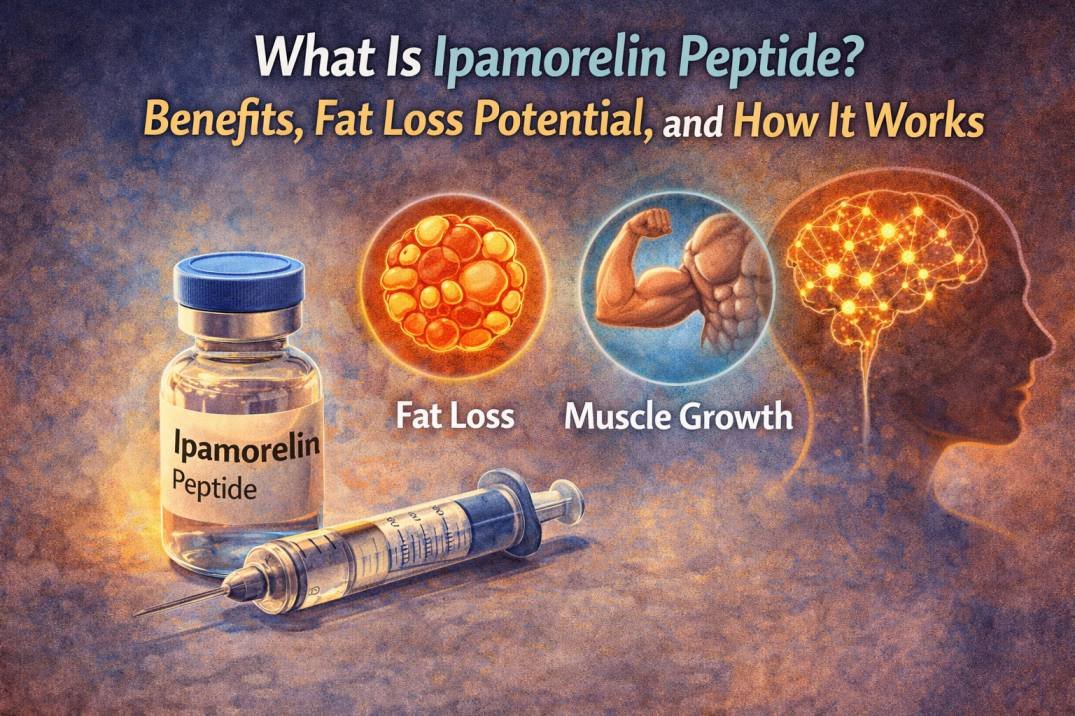
Maybe you’ve come across ipamorelin as a new way to boost growth hormone, but what does it actually do? Ipamorelin is a synthetic peptide that signals your pituitary to release growth hormone, supporting muscle recovery, lean mass, and fat loss—without the big hunger or cortisol spikes that come with older drugs.
Let’s break down what ipamorelin actually does, how it works, what kind of benefits you can expect, who it might help, and what you should know about safety and dosing before jumping in.
Key Takeaways
- Ipamorelin increases your natural growth hormone release, which can help recovery and body composition.
- It might reduce fat and support muscle, and tends to have a pretty mild side effect profile.
- You’ll want to understand dosing, safety, and the legal status before trying it out.
What Is Ipamorelin Peptide?
Ipamorelin is a small synthetic peptide that tells your body to release more growth hormone. It targets certain receptors in your brain and doesn’t mess with other hormones as much as some older options do.
Overview of Ipamorelin
It’s a pentapeptide—just five amino acids strung together. Ipamorelin binds to the growth-hormone secretagogue receptor (GHS-R) in your hypothalamus and pituitary, which triggers a pulse of natural growth hormone (GH) instead of dumping GH into your system directly.
After a dose, you get a short, controlled GH surge. This can help with muscle repair, collagen production, and fat metabolism, especially if you’re already eating well and training. Most people inject it under the skin, usually timing it around sleep or workouts since the action window is short and predictable.
Discovery and Development
Researchers designed ipamorelin to mimic ghrelin, the “hunger” hormone that also kicks off GH release. They screened a bunch of small peptides to find one that activated GHS-R with high selectivity and didn’t cause a bunch of side effects elsewhere.
Early studies looked at safety, dosing, and how it affects GH pulses. They found ipamorelin bumps up GH with barely any changes to cortisol, prolactin, or ACTH, which made it pretty appealing for things like muscle wasting, aging, and metabolism. Researchers are still tinkering with dosing schedules and possible combos.
How Ipamorelin Differs From Other Peptides
Ipamorelin stands out because it’s highly selective for GHS-R and doesn’t trigger as many side effects. Unlike GHRH analogs, it acts more like ghrelin and usually won’t spike cortisol or prolactin much.
Compared to peptides like sermorelin or GHRP-6, ipamorelin gives a cleaner GH pulse and doesn’t ramp up your appetite as much. Its shorter, more controllable duration makes it easier to time for recovery or fat loss. That’s why some people prefer it over other options.
How Ipamorelin Works In the Body
Ipamorelin nudges your pituitary to send out pulses of growth hormone (GH), lowers somatostatin’s braking effect, and doesn’t really bump up cortisol or prolactin. It targets specific receptors in your brain and pituitary, then sets off a chain reaction in tissues that respond to GH.
Mechanism of Action
Ipamorelin mimics ghrelin, but it’s all about the growth hormone release. It binds to the growth-hormone secretagogue receptor (GHS-R1a) on cells in the hypothalamus and pituitary, which makes your pituitary spit out GH in short bursts—not a constant drip.
It also reduces somatostatin’s inhibition. Since somatostatin normally suppresses GH, ipamorelin lets those GH pulses get bigger. The end result? You get more circulating GH and a bump in insulin-like growth factor 1 (IGF-1) from your liver.
Interaction With Growth Hormone Receptors
Ipamorelin itself doesn’t bind to the growth hormone receptor (GHR) on your tissues. What it does is make your pituitary release more GH, and that GH binds to GHRs in muscle, fat, bone, and liver.
When GH hits the liver, IGF-1 production goes up. IGF-1 is what carries a lot of GH’s growth and repair messages to your muscles and bones. In muscle and fat, GH signaling ramps up protein synthesis and fat breakdown. How much this happens depends on your dosing and timing.
Effects on Hormonal Pathways
Ipamorelin mainly boosts GH and IGF-1, with little effect on other hormones. Older secretagogues could spike cortisol or prolactin, but ipamorelin mostly avoids that.
More GH pulses mean your metabolism shifts: you’ll break down more fat and send better repair signals to your tissues. Since it works through your natural GH axis, results depend on your pituitary function, age, and where your hormones are at baseline.
Benefits of Ipamorelin
Ipamorelin bumps up your natural growth hormone without big spikes in cortisol or prolactin. It can help your body build and repair tissue, shift body composition, improve sleep, and give you a bit more daily energy.
Muscle Growth and Recovery
Ipamorelin triggers GH release, which boosts protein synthesis and helps muscles recover after training. You might notice better muscle repair and less soreness, since GH helps rebuild muscle fibers.
If you combine it with resistance training and enough protein, you’ll probably see improved recovery and gradual lean mass gains. Most people use small, steady doses for consistent GH elevation rather than big, infrequent spikes.
Watch out for things like injection-site irritation, and definitely talk to a clinician before starting. Ipamorelin isn’t a steroid; it just signals your body to make more of its own GH, so results are slower and depend on your own effort with training and nutrition.
Anti-Aging Properties
Ipamorelin can help skin and tissue health through increased GH and IGF-1, which both support tissue repair and collagen production. You might see firmer skin or fewer fine lines after a few months—though, honestly, results vary a lot.
It could also help you keep lean mass and lose fat, making your body composition look a bit younger. But these benefits take time and you’ll need to stick with healthy habits. Clinical oversight is a good idea—long-term effects and best dosing for anti-aging are still up in the air.
Improved Sleep Quality
Ipamorelin can boost deep sleep by increasing those nightly GH pulses that happen during slow-wave sleep. Better deep sleep means more memory consolidation, faster muscle recovery, and just better functioning during the day.
You might find yourself waking up less groggy. Most people take it near bedtime so the GH release lines up with their sleep cycle. Don’t mix it with stuff that messes up your sleep, and talk to your provider about possible interactions with any meds.
Enhanced Energy Levels
With higher GH and IGF-1, your metabolism can run more smoothly, so you might feel more energetic throughout the day. Workouts may feel easier, and you could notice less fatigue in daily life.
These energy gains usually show up slowly, tied to better body composition and sleep. Don’t expect a quick energy jolt—ipamorelin works by supporting recovery and metabolism, not by acting as a stimulant.
Ipamorelin for Fat Loss
Ipamorelin increases your natural GH pulses, nudges your body to burn more fat, and helps keep your lean mass. You might see changes in metabolism, a drop in body fat percentage, and some shifts in where you lose fat first—though there are some caveats.
Influence on Metabolism
Ipamorelin gets your pituitary to release more GH, which boosts lipolysis (fat breakdown) and can raise your resting metabolic rate a bit. With more GH, your body tends to burn more fat for energy and spares muscle protein.
Dose and timing matter here. Those short GH spikes after injections send out repeated metabolic signals. You’ll get the most from ipamorelin if you pair it with calorie control and resistance training. It won’t torch calories by itself—the peptide just amplifies what you do with diet and exercise.
Reduction of Body Fat Percentage
Clinical and anecdotal reports suggest ipamorelin can lower body fat percentage over a few weeks to months. You might see subtle changes after a month, and more noticeable shifts by month two or three. Most of this comes from losing fat while keeping or gaining lean mass.
Track your progress with body-fat scans, skinfold calipers, or just consistent measurements. Results will vary depending on your hormone levels, age, diet, and how hard you train. Both women and men see benefits, but older adults or people with low GH might notice bigger changes.
Targeted Fat Reduction
Ipamorelin won’t magically melt fat off one specific spot. Growth hormone tends to reduce visceral fat and central body fat more than those stubborn subcutaneous pockets. So you’re more likely to lose belly fat before you notice changes in your hips or thighs.
If you want to shape specific areas, keep your focus on overall fat loss and use targeted resistance training to hold onto muscle where you want it. Usually, you’ll see the most visible changes in areas with more metabolically active fat—often the abdomen and upper body.
Sustaining Fat Loss Results
To keep fat off, you’ll need to stick with good habits: calorie control, strength training, and enough protein. Ipamorelin helps you keep lean mass during dieting, which can prevent metabolic slowdown, but if you stop the peptide and drop your habits, fat tends to creep back.
Keep an eye on your sleep and stress, since bad sleep or high cortisol can blunt GH’s effects. If you’re cycling ipamorelin, use objective measures to decide when to pause or restart.
Ipamorelin Dosage and Administration
Ipamorelin dosing is all about small, frequent injections to safely raise growth hormone. You’ll use microgram amounts, inject under your skin, and cycle on and off to see benefits while avoiding side effects.
Recommended Dosage Guidelines
Start low and tweak based on how you respond and what you’re aiming for. Most adults use 100–300 mcg per injection, given 2–3 times daily for recovery or fat loss. Going over 300 mcg doesn’t seem to help much and can raise your risk of side effects.
Try timing doses around sleep and workouts. Many people take one dose 15–30 minutes before bed and another before or after training. If you’re doing three doses, space them out—morning, pre-workout, and pre-bed, about 6–8 hours apart.
If you have health issues or use other hormones, talk to your doctor for a plan that fits you. Track how you feel and watch for side effects like joint pain, water retention, or anything unusual—if that happens, dial back your dose.
Administration Methods
Ipamorelin usually comes as a lyophilized powder, so you’ll need to reconstitute it with bacteriostatic water. Follow the vial’s instructions for the right amount of water—say, 2 mg vial plus 2 mL water gives you 1 mg/mL.
Inject it subcutaneously (just under the skin) with a small insulin syringe (29–31 gauge). People commonly pick the abdomen, outer thigh, or upper arm as injection sites, and it’s smart to rotate spots daily to sidestep irritation or lumps.
Keep the reconstituted peptide in the fridge and use it within the time frame the manufacturer recommends, usually 14–28 days. Always use sterile technique: swab the vial top, grab a fresh syringe, and toss single-use stuff right after.
Cycle Duration and Frequency
Most cycles last 8–12 weeks, then you’d take a 4–8 week break. This lets you see how things are working and helps prevent your hormone pathways from getting sluggish.
If you’re just starting out, shorter cycles (4–6 weeks) might be easier for figuring out tolerance. During a cycle, people typically do 2–3 injections per day.
Some folks switch to every-other-day dosing or drop to once daily for maintenance after an initial push. If you notice side effects or your prescriber suggests it, tweak your dosing schedule.
Planning to use it long-term? Get your blood checked now and then—growth hormone, IGF-1, glucose, and anything else your doctor thinks matters. If side effects stick around, hit pause and talk to your clinician.
Potential Side Effects and Safety
Ipamorelin usually has a mild side effect profile, but you could see some short-term reactions or safety issues. It’s worth knowing what’s common, rare, or long-term so you can catch problems early and chat with your provider.
Common Side Effects
Some people get mild headaches, a bit of water retention, or joint stiffness—especially in the first weeks. This tends to happen more at higher doses or if dosing isn’t tailored.
You might notice mild nausea, flushing, or tingling at the injection site. Usually, these fade after a few days or weeks.
Watch for increased hunger; since ipamorelin boosts GH, it can raise appetite. If you deal with diabetes or insulin resistance, keep an eye on your blood sugar. Ipamorelin can mess with glucose control for some people, so talk to your clinician about adjusting your dose or testing more often.
Long-Term Safety Considerations
We just don’t have much long-term human data on ipamorelin. Most info comes from short studies or animal research, so there are still unknowns if you use it for years.
Concerns could include changes in glucose metabolism and possible effects on soft tissue growth. If you’re using it long-term, get labs for fasting glucose, HbA1c, and general metabolic markers every so often.
The cancer risk from GH stimulation is still theoretical, but it’s not something to ignore. If you’ve had cancer or are at risk, don’t use this stuff long-term without close medical supervision, and keep up with screenings as your doctor recommends.
Contraindications and Precautions
Skip ipamorelin if you have active cancer or a history of hormone-sensitive tumors. Stimulating growth hormone could make things worse.
Don’t use it if you’re pregnant or breastfeeding—we just don’t know if it’s safe. Also, avoid mixing with unmonitored hormone therapies or anabolic drugs.
Let your provider know about any diabetes, heart disease, or sleep apnea. You may need extra monitoring or dose tweaks. Use only pharmaceutical-grade products from a licensed clinician, stick to sterile injection technique, and report any serious or lingering side effects right away.
Comparing Ipamorelin to Other Peptides
Ipamorelin boosts growth hormone with fewer side effects and targets the ghrelin receptor specifically. You’ll notice differences in how fast it works, which hormones it affects, and how often you need to inject compared to other peptides.
Ipamorelin vs. GHRP-6
Both ipamorelin and GHRP-6 hit the ghrelin receptor to release growth hormone. Ipamorelin’s more selective, giving you a clean GH pulse without big jumps in cortisol or prolactin.
You might get the GH benefits—better recovery, body composition—without the hormonal rollercoaster. GHRP-6 tends to boost appetite and can raise cortisol and prolactin more than ipamorelin. If you care about controlling appetite and keeping hormones steady, ipamorelin usually wins out.
Dose timing is similar for both, often before sleep or workouts, but ipamorelin generally gives you smoother, less dramatic hormone shifts.
Ipamorelin vs. CJC-1295
CJC-1295 is a GHRH analog that ramps up your body’s own GHRH signaling. On its own, especially the DAC version, it stretches out GH pulse amplitude and duration by keeping GHRH levels higher.
Ipamorelin acts at the ghrelin receptor and mainly sparks immediate GH release from the pituitary. If you want longer-lasting GH elevation, you might lean toward CJC-1295. Combining it with ipamorelin often gives a stronger GH pulse, since they work at different sites—GHRH and GHSR.
Dosing and timing matter here: CJC-1295 changes your baseline GHRH, while ipamorelin triggers pulses. So, if you want the best results, coordinate them carefully.
Synergistic Use With Other Compounds
You can stack ipamorelin with GHRH analogs like CJC-1295 to boost GH pulses without spiking cortisol or prolactin much. A popular combo is ipamorelin’s quick pulse plus CJC-1295’s longer GHRH support for better fat loss and recovery.
Keep dosing windows clear: take ipamorelin before sleep or training for a pulse, and use CJC-1295 as recommended for steady GHRH. Watch for side effects, track your labs, and notice any appetite changes. If you’re on other hormones or meds, check for interactions and talk to a qualified clinician before stacking peptides.
Who Should Consider Ipamorelin?
Ipamorelin could be a good fit if you want to boost your natural growth hormone (GH) without the harsher side effects of other peptides. It tends to appeal to folks interested in recovery, sleep, or slow and steady body composition changes.
Athletes and regular gym-goers often use it to speed up muscle recovery and help with lean mass. If you’re training hard and want less downtime, ipamorelin might help—assuming your nutrition and sleep are dialed in.
Some people worried about mild age-related GH decline look for energy and bone support here. It’s not a magic bullet for aging, though, and changes take weeks or months, not days.
Don’t use ipamorelin if you have active cancer, untreated pituitary disorders, or if you’re pregnant or breastfeeding. Always talk through your medical history with a clinician before starting any peptide therapy.
Here’s a practical checklist for your provider:
- Goals: recovery, fat loss, sleep, or GH support
- Health screen: hormonal tests, cancer history, metabolic health
- Plan: dosing, monitoring, and lifestyle support
If you’re hoping for dramatic fat loss or instant muscle gains, ipamorelin isn’t your answer. It’s just one tool—pair it with diet, exercise, and medical advice for the best, safest results.
Legal and Regulatory Status of Ipamorelin
Ipamorelin isn’t FDA-approved for human medical use. Your doctor can’t legally prescribe it as a routine treatment, and pharmacies can’t just hand it out for patient care.
In most places, you can only buy and own ipamorelin for lab research. Sellers who market it for anti-aging, muscle building, or weight loss are taking legal risks since these uses aren’t approved.
Compounded peptides are a bit of a wild card. Some compounding pharmacies offer ipamorelin, but quality and purity can be all over the place. The FDA’s flagged issues with inconsistent manufacturing and safety concerns from unapproved compounded peptides.
Sports authorities ban ipamorelin in competition. If you’re an athlete, using it could get you sanctioned or disqualified under anti-doping rules.
Rules vary by state and country, too. Some places clamp down harder on sales and distribution. Check your local laws and medical regulations before you try to get or use ipamorelin.
If you’re considering it, put safety and legality first. Talk to a licensed medical pro about approved alternatives, and be careful with anything sold online that doesn’t have legit lab testing or clear legal status.
Frequently Asked Questions
This section covers how ipamorelin works, what benefits people notice, its fat-loss potential, common side effects, and typical dosing patterns. You’ll find straightforward info to help you compare ipamorelin with other growth hormone secretagogues and weigh the pros and cons.
What is ipamorelin, and how does it differ from other growth hormone secretagogues?
Ipamorelin is a synthetic peptide that mimics ghrelin and triggers growth hormone (GH) release from your pituitary. It’s a selective GH secretagogue, made up of five amino acids.
Compared to other options like GHRP-6 or GHRH analogs, ipamorelin causes less appetite stimulation and doesn’t spike cortisol or prolactin as much. It also pairs nicely with GHRH analogs like CJC-1295 for a more powerful and sustained GH pulse.
How does ipamorelin stimulate growth hormone release, and what pathways are involved?
Ipamorelin binds to ghrelin receptors (GHS-R1a) on pituitary somatotrophs and in parts of the hypothalamus. That receptor activation prompts the pituitary to release GH in pulses.
The process is mostly receptor-mediated signaling, which ups intracellular calcium and pushes out GH from storage vesicles. It acts downstream of natural ghrelin and doesn’t mess much with other hormone systems.
What benefits do people most commonly report when using ipamorelin?
Most people say they sleep better and bounce back faster after workouts or small injuries. Some mention they notice more lean muscle and improved exercise recovery, but not everyone experiences this the same way.
Over time, a few users see subtle improvements in bone strength or skin quality. Honestly, results seem to depend a lot on factors like dose, diet, and how active you are.
Can ipamorelin support fat loss, and what does the evidence suggest about its effectiveness?
Ipamorelin might help with fat loss, but it does so indirectly. By boosting GH, it encourages your body to burn fat and shift body composition a bit.
Research points to better fat metabolism when GH goes up, though don’t expect miracles. You’ll probably see mild to moderate fat changes if you pair ipamorelin with a solid diet and exercise routine.
It’s definitely not a magic fat-loss solution on its own. If you’re hoping for dramatic results without lifestyle changes, you’ll probably be disappointed.
What are the most common side effects and safety considerations associated with ipamorelin?
The usual side effects? Some people get mild headaches, a little swelling or stiffness in the joints, or a bit of water retention. Injection spots can get irritated, too—annoying but generally not serious.
If you have diabetes or insulin resistance, keep an eye on your blood sugar and insulin sensitivity. Pregnant people and those with active cancer should steer clear.
Honestly, it’s best to talk things over with a qualified clinician before starting. Regular lab checks for IGF-1, glucose, and hormones can help you stay on top of things.
What dosing schedules and cycle lengths are most commonly used for ipamorelin in practice?
Most people use 200 to 300 mcg per injection, usually 1–3 times a day. They tend to take it before sleep or after workouts.
Some folks split the dose to mimic more natural GH pulses. It’s not a strict science—people experiment a bit.
Cycles usually last 8–12 weeks. Adjustments happen depending on goals, lab results, or if side effects show up.
Doctors can help figure out dose, timing, and when it’s smart to take a break or stop entirely.