Address
30 N Gould St.
Suite R, Sheridan, WY 82801, USA

What to Eat While Taking Semaglutide or Tirzepatide: Practical Meal Guidance for Better Results

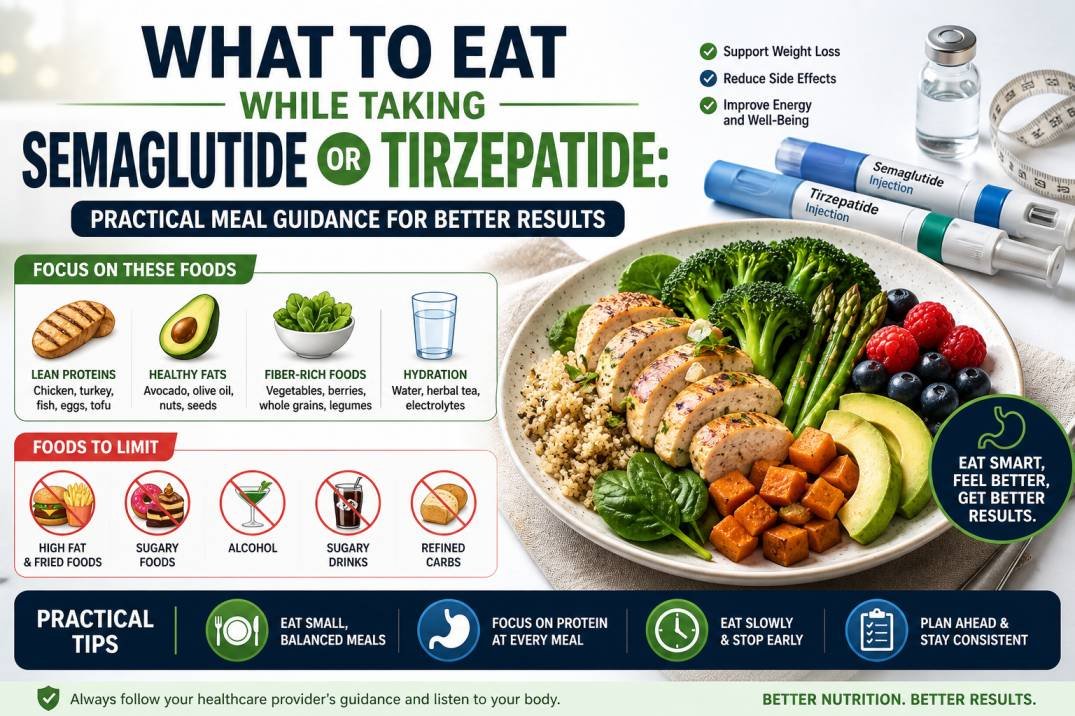
You can keep using semaglutide or tirzepatide while eating foods that support weight loss, steady blood sugar, and fewer stomach side effects. Focus on protein, fiber, healthy fats, and easy-to-digest foods to help control appetite, preserve muscle, and reduce nausea. Small, regular meals and good hydration also make the medicines easier to tolerate.
You’ll learn which specific foods to choose, what to avoid, simple meal ideas, and how to handle common side effects like nausea or constipation. Use these practical tips to make the medication work better for your goals while staying nourished and energized.
Key Takeaways
- Prioritize protein, fiber, and healthy fats to support results and preserve muscle.
- Avoid highly processed, greasy, or large meals that often trigger nausea.
- Plan small meals, stay hydrated, and adjust choices to fit your needs.
What to Eat While Taking Semaglutide or Tirzepatide?
Choose meals that keep you full, protect muscle, and avoid foods that trigger nausea or blood sugar spikes. Prioritize lean protein, non-starchy vegetables, whole grains in sensible portions, healthy fats, and plenty of water.
Balanced Macronutrient Ratios
Aim for a plate with protein, vegetables, and controlled carbs. A practical target is roughly 30% of calories from protein, 30% from healthy fats, and 40% from carbohydrates, but focus on portion size rather than exact percentages.
Choose low-glycemic carbs like oats, quinoa, sweet potato, and whole-grain bread to avoid fast blood sugar rises. Fill half your plate with non-starchy vegetables—spinach, broccoli, peppers—to add fiber and volume without many calories. Include small servings of healthy fats such as olive oil, avocado, or nuts to support satiety and nutrient absorption.
Limit sugary drinks, sweets, and highly processed snacks. These can worsen nausea and reduce appetite for protein and veggies. Use simple swaps: fruit instead of candy, Greek yogurt instead of sugary granola, and whole fruit for juice.
Adequate Protein Intake
Eat protein at every meal to preserve muscle as you lose weight and to reduce hunger. Aim for about 20–30 grams of protein per meal for most adults; adjust upward if you exercise heavily or have higher needs.
Good choices include grilled chicken, turkey, fish, eggs, low-fat dairy, tofu, tempeh, and legumes. Keep portions practical: a 3–4 ounce cooked piece of meat or a cup of cooked beans usually meets the per-meal target. If you struggle to eat solid food early in treatment, use protein shakes made from whey or plant protein with low added sugar.
Spread protein across the day—don’t load it all at dinner. This pattern helps keep metabolism steady and reduces muscle loss. Track intake for a few days to ensure you hit targets, using a simple app or food label checks.
Importance of Hydration
Drink water regularly because these medicines can reduce appetite and make you eat less, increasing risk of mild dehydration. Aim for 8–10 cups (about 2–2.5 liters) daily, more if you exercise or live in a hot climate.
Sip water before and between meals to ease nausea and promote fullness without replacing needed protein. Include unsweetened herbal tea and sparkling water if you prefer variety. Limit sugary beverages and alcohol; they add calories and may worsen GI side effects.
If you notice dark urine, dry mouth, or dizziness, increase fluids and check with your clinician. For some people, adding a pinch of salt or an electrolyte drink after heavy sweating helps maintain balance.
Recommended Foods to Include
Choose foods that keep you full, protect muscle, and ease digestion. Focus on protein at each meal, plenty of non-starchy vegetables, whole grains for fiber, and healthy fats in small amounts.
Lean Protein Sources
Prioritize lean proteins to help preserve muscle while you lose weight. Aim for about 20–30 grams of protein at main meals when possible.
Good options: skinless chicken breast, turkey, lean cuts of pork, and white fish like cod or tilapia. Include fatty fish (salmon, mackerel) twice weekly for omega-3s, but keep portions moderate. Plant proteins such as lentils, chickpeas, tofu, and tempeh work well too; combine them with grains or nuts for a complete amino acid profile.
Use simple cooking methods — grilling, baking, steaming — to avoid added fats that can worsen nausea. Try a protein-rich snack like Greek yogurt, a hard-boiled egg, or a small handful of almonds between meals if appetite allows.
Non-Starchy Vegetables
Fill half your plate with non-starchy vegetables to add volume and nutrients without many calories. These help with digestion and provide fiber that supports steady blood sugar.
Choose vegetables like spinach, kale, broccoli, cauliflower, bell peppers, zucchini, cucumbers, and leafy salads. Eat them raw, steamed, roasted, or lightly sautéed. Aim for a variety of colors across the week to get different vitamins and antioxidants.
If nausea or early fullness limits intake, try blending vegetables into soups or smoothies, or serve small portions with a protein to make them easier to tolerate.
High-Fiber Whole Grains
Include whole grains to support digestion and keep you satisfied between meals. Fiber slows digestion, helps control blood sugar, and reduces hunger.
Good choices: oats, barley, quinoa, brown rice, whole-wheat pasta, and 100% whole-grain breads. Start with smaller portions if you experience bloating, and increase slowly to let your gut adjust. Aim for at least 3–5 servings of whole grains or high-fiber foods daily, combined with vegetables and protein.
Check labels for fiber content: pick products with 3+ grams of fiber per serving. Mix grains with legumes or vegetables to boost fiber and keep meals balanced.
Healthy Fats Choices
Include small amounts of healthy fats to aid nutrient absorption and keep meals satisfying. Focus on unsaturated fats and limit saturated or trans fats.
Choose olive oil, avocado, nuts, seeds, and fatty fish. Use olive oil for dressings and light cooking. Add a quarter to half an avocado to salads or smoothies, or sprinkle flaxseed or chia over yogurt for omega-3s and extra fiber.
Keep portion sizes small — fats are calorie-dense. A typical serving is 1 tablespoon of oil, a small handful (about 1 oz) of nuts, or one-quarter to one-half of an avocado.
Foods and Habits to Minimize
Focus on foods and habits that raise blood sugar quickly, slow digestion in unhealthy ways, or increase nausea. Cut back on sweet, highly processed items and limit drinking that can interfere with blood sugar and medication effects.
Simple Carbohydrates and Added Sugars
Avoid candies, regular soda, fruit juice, pastries, and sweetened cereals. These raise blood sugar fast and can reduce the appetite control benefits of semaglutide or tirzepatide. They also make weight loss harder because you may feel hungry sooner after eating.
Choose whole fruits instead of juice, and snack on plain yogurt with berries rather than granola bars or sweetened yogurt. If you need a treat, pick a small portion of dark chocolate (70% cocoa) or a teaspoon of honey with plain cottage cheese. Read labels: look for “sugar,” “syrup,” or ingredients ending in “-ose.” Aim to keep added sugars to a small portion of your daily calories.
Ultra-Processed Foods
Limit fast food, frozen dinners, packaged snack cakes, and flavored instant oats. These foods often contain high amounts of refined carbs, unhealthy fats, sodium, and additives that can increase bloating or nausea while you adjust to GLP-1 therapy. They also tend to be calorie-dense and low in protein and fiber, which work against steady blood sugar and satiety.
Swap in simple whole-food swaps: grilled chicken, canned beans, brown rice, and steamed vegetables. Prepare easy meals ahead like mason jar salads or overnight oats made with milk and chia seeds. When buying packaged items, choose those with short ingredient lists and at least 5–7 grams of protein per serving.
Alcohol Consumption
Limit beer, wine, cocktails, and hard seltzers. Alcohol can lower blood sugar unpredictably, especially if you skip meals because the drugs reduce appetite. It also increases the risk of nausea and vomiting, and can worsen dehydration and dizziness that some people experience on GLP-1 drugs.
If you drink, have a light snack with protein and carbs before or with alcohol, and choose lower-sugar options like dry wine or spirits with soda water. Keep to one standard drink or less, and avoid drinking on days you feel faint or very nauseous. Tell your clinician about your drinking so they can advise on safety with your dose.
Meal Planning and Portion Guidance
Plan meals that keep protein steady, vegetables high, and portions controlled. Aim for regular meals and snacks to manage hunger, limit nausea, and protect muscle while you lose weight.
Sample Meal Structure
Breakfast: 20–30 g protein such as Greek yogurt, scrambled eggs, or a protein shake. Add 1 cup of berries or a small banana for fiber and vitamins.
Lunch: 25–35 g protein like grilled chicken, tuna, or tofu. Fill half your plate with non-starchy vegetables (salad, steamed broccoli, peppers). Include 1/2 cup cooked whole grain or starchy vegetable if you need energy.
Dinner: 25–35 g protein — fish, lean beef, or legumes. Pair with 1–2 cups of mixed vegetables and a small portion (1/2 cup) of quinoa, sweet potato, or brown rice.
Snacks: 100–200 calorie options with protein: a small handful of nuts and a piece of fruit, cottage cheese with sliced cucumber, or a hard-boiled egg.
Portion tip: use your hand—palm for protein, fist for vegetables, cupped hand for carbs, thumb for fats.
Mindful Eating Strategies
Eat slowly and put your fork down between bites. This helps you notice fullness earlier and reduces overeating.
If nausea occurs, choose bland, soft foods (oatmeal, toast, applesauce) and eat smaller, more frequent meals. Sip water or ginger tea to ease stomach upset.
Track one week of typical meals and note times you feel hungry or nauseous. Then move high-protein items earlier in the day if hunger spikes in the afternoon.
Use a plate with smaller diameter to naturally reduce portions, and pre-plate snacks instead of eating from the package. These small habits cut calories without complicated rules.
Managing Common Side Effects Through Diet
Small, steady changes in what you eat can cut nausea, bloating, and diarrhea. Focus on bland, low-fat foods, steady fluids, and regular small meals to keep symptoms mild and manageable.
Preventing Nausea with Food Choices
Eat small meals every 3–4 hours instead of large plates. Try snacks like plain Greek yogurt, a banana, or a slice of toast with peanut butter to keep your stomach settled.
Choose low-fat proteins: grilled chicken, fish, eggs, or tofu. Fatty, fried, or very spicy foods often trigger nausea on GLP‑1 medicines, so limit them, especially at the start of treatment.
Sip liquids slowly. Cold water, ginger tea, or clear broth between bites helps. Avoid drinking large amounts with meals since liquids can increase fullness and nausea.
Try bland carbohydrate options if you feel queasy: plain crackers, rice, or boiled potatoes. If nausea is worse in the morning, eat a small dry snack before getting out of bed.
Reducing Gastrointestinal Discomfort
To ease bloating and constipation, eat fiber-rich foods but increase fiber slowly over 1–2 weeks. Good choices: oats, berries, lentils, and cooked vegetables. Rapid increases can worsen gas.
Stay hydrated. Aim for regular sips that total about 8 cups (2 liters) a day unless your provider says otherwise. Fluids help fiber move through your gut and reduce straining.
Avoid gas-producing foods if you notice symptoms: beans, cabbage, broccoli, and carbonated drinks. Swap for well-cooked vegetables and peeled fruits if those work better for you.
If you get diarrhea, pick binding foods: plain rice, bananas, applesauce, and toast (BRAT). Reintroduce higher-fiber and fatty foods slowly as symptoms improve.
Key Micronutrients to Focus On
Focus on nutrients that protect muscle, support energy, and reduce digestive side effects. Prioritize protein-linked vitamins, bone-supporting minerals, and fluids with electrolytes.
Essential Vitamins and Minerals
You need vitamin D and calcium to protect bone health when you lose weight. Aim for fatty fish, fortified milk, or a supplement if your blood level is low.
Vitamin B12 and iron support energy and red blood cell production. Eat lean red meat, poultry, eggs, fortified cereals, and leafy greens; consider a B12 supplement if you follow a strict vegetarian diet.
Vitamin C helps with iron absorption and immunity. Include citrus, bell peppers, and strawberries with meals that contain iron.
Magnesium aids muscle function and sleep. Get it from nuts, seeds, whole grains, and leafy greens. If you experience muscle cramps or insomnia, ask your clinician about testing and supplementation.
Electrolyte Balance
Semaglutide and tirzepatide can reduce appetite and fluid intake, so monitor sodium and potassium. Low intake or excess losses from vomiting and diarrhea can cause weakness, dizziness, or irregular heartbeat.
Choose foods high in potassium: bananas, potatoes, yogurt, and beans. For sodium, avoid very low-salt diets if you feel lightheaded; use modest salt or salty broths as needed.
If you have nausea or vomiting, sip oral rehydration solutions or low-sugar sports drinks to restore electrolytes. Check with your clinician before using supplements if you take blood-pressure or heart medicines.
Lifestyle Considerations Beyond Diet
You can boost results by adding regular movement and better sleep habits. Managing stress and staying active help protect muscle, lower blood sugar, and reduce side effects like nausea.
Physical Activity Recommendations
Aim for at least 150 minutes of moderate aerobic activity per week, such as brisk walking, cycling, or swimming. Break this into 30-minute sessions five days a week if possible.
Add two strength sessions weekly to preserve muscle while losing weight. Focus on compound moves—squats, lunges, push-ups, and rows—using body weight, bands, or light weights. Do 2–3 sets of 8–12 reps.
Include daily light movement: short walks after meals to lower blood sugar and reduce nausea. If you feel dizzy or unusually weak, stop and sit; consult your provider before increasing intensity.
Use a simple tracking method: a calendar, phone app, or step counter. Track workouts, weight training, and how you feel during exercise to adjust safely.
Sleep and Stress Management
Target 7–9 hours of consistent sleep each night. Keep a regular bedtime and wake time, limit screens 30–60 minutes before bed, and make the bedroom cool, dark, and quiet.
Practice stress-reduction techniques that fit your routine. Try 5–10 minutes of deep breathing, progressive muscle relaxation, or guided meditation daily to lower cortisol and appetite.
Watch for signs of poor sleep or high stress—worse nausea, trouble concentrating, or increased cravings. If these occur, talk with your clinician or a mental health professional for tailored strategies.
Create small habits: a nightly wind-down routine, short daytime walks, and asking for support when needed. These steps help you stick with treatment and feel better day to day.
Individualizing Your Approach
You need a plan that matches your health, schedule, and food tastes. Make choices that protect your blood sugar, limit side effects, and fit into your life.
Consulting a Healthcare Provider
Talk with your prescriber or a registered dietitian before changing meals or starting supplements. Bring a 3-day food log and a list of current meds (including OTCs). This helps them spot interactions, nutrient gaps, or risks for low blood sugar.
Ask about adjusting insulin or sulfonylureas if you have diabetes, since GLP-1 drugs can lower doses. Request written targets: weight-loss pace, protein goals (for example, 20–30 g per meal), and safe calorie ranges. If you have kidney, liver, or GI disease, get tailored meal and hydration advice.
Discuss strategies to handle nausea or slowed stomach emptying. Your clinician can suggest timing of doses, anti-nausea meds, or small, low-fat meals. Plan follow-ups at set intervals to review progress and labs.
Adapting to Personal Preferences and Needs
Match food choices to what you tolerate and like so you can stick with the plan. If you prefer savory breakfasts, try a high-protein egg scramble; if you like sweet, pick Greek yogurt with berries. Keep portion sizes consistent to avoid overeating when appetite returns.
Use simple swaps: lean protein instead of processed meats, whole fruits instead of fruit juice, and cooked vegetables if raw greens cause discomfort. If you exercise, boost protein after workouts to preserve muscle — a 20–30 g protein snack is a practical target.
Prepare for social situations by choosing smaller portions or sharing dishes. Track symptoms after different meals to learn what triggers nausea or fullness, then adjust textures, fiber, or fat accordingly.
Frequently Asked Questions
These answers focus on specific foods, daily targets, and simple meal strategies you can use while on semaglutide or tirzepatide. Expect concrete portions, meal timing tips, and clear food lists to reduce nausea, protect muscle, and manage digestion.
Which foods are most effective for supporting steady weight loss while using these medications?
Choose lean proteins, nonstarchy vegetables, and whole grains.
Examples: chicken breast, turkey, tofu, beans, spinach, broccoli, cauliflower, quinoa, oats, and brown rice.
Include healthy fats in small amounts to improve satiety.
Examples: olive oil, avocado, nuts, and seeds — about 1 tablespoon oil or a small palmful of nuts per meal.
Focus on high-volume, low-calorie foods to feel full without many calories.
Vegetable soups, salads with lean protein, and steamed vegetables work well.
How much protein should I aim for each day to preserve muscle and stay full?
Aim for roughly 0.6–0.8 grams of protein per pound of body weight per day.
For example, if you weigh 160 pounds, target about 96–128 grams of protein daily.
Spread protein across meals and snacks.
Try 20–35 grams at each meal and 10–20 grams at snacks to keep muscle and curb hunger.
What types of meals help reduce nausea, reflux, or stomach discomfort during treatment?
Eat plain, low-fat, and mildly seasoned foods.
Good choices: baked or grilled chicken, plain fish, steamed vegetables, and plain rice.
Avoid large, heavy meals and eat small portions more often.
Smaller meals lower reflux risk and reduce nausea.
Choose lukewarm or room-temperature foods if very hot or very cold foods upset you.
Ginger tea or a small piece of ginger can help mild nausea.
Which foods and drinks are most likely to worsen side effects and should be limited or avoided?
Limit high-fat, fried, and greasy foods.
These often cause nausea, stomach pain, or diarrhea.
Avoid large portions of sugary or highly processed foods.
Candy, pastries, and sugary drinks can trigger blood sugar swings and digestive upset.
Cut back on alcohol and carbonated drinks.
Alcohol increases nausea risk. Fizzy drinks can cause bloating and reflux.
How should I adjust meal size and meal timing to match reduced appetite and slower digestion?
Reduce meal size and add nutritious snacks.
Aim for 3 small meals and 1–3 protein-rich snacks rather than 2 large meals.
Eat slowly and stop when you feel comfortably satisfied.
Give yourself 15–20 minutes per meal to notice fullness cues.
Time meals to match activity and meds.
If you feel more hungry around exercise, eat a protein snack before or after workouts.
What are the best high-fiber choices to prevent constipation without aggravating bloating?
Choose soluble fiber first: oats, cooked oats, chia seeds, and peeled apples.
Soluble fiber softens stool and is less likely to cause gas than some insoluble fibers.
Add fermented foods and fluids to help digestion.
Plain yogurt, kefir, and adequate water (aim for 8 cups a day, more if active) ease transit.
Introduce high-fiber vegetables slowly and cook them until soft.
Cooked carrots, zucchini, and green beans are easier on the gut than raw cruciferous vegetables.