Address
30 N Gould St.
Suite R, Sheridan, WY 82801, USA

Can You Combine GLP-1 with Ipamorelin? Practical Guidance on Safety, Interactions, and Outcomes

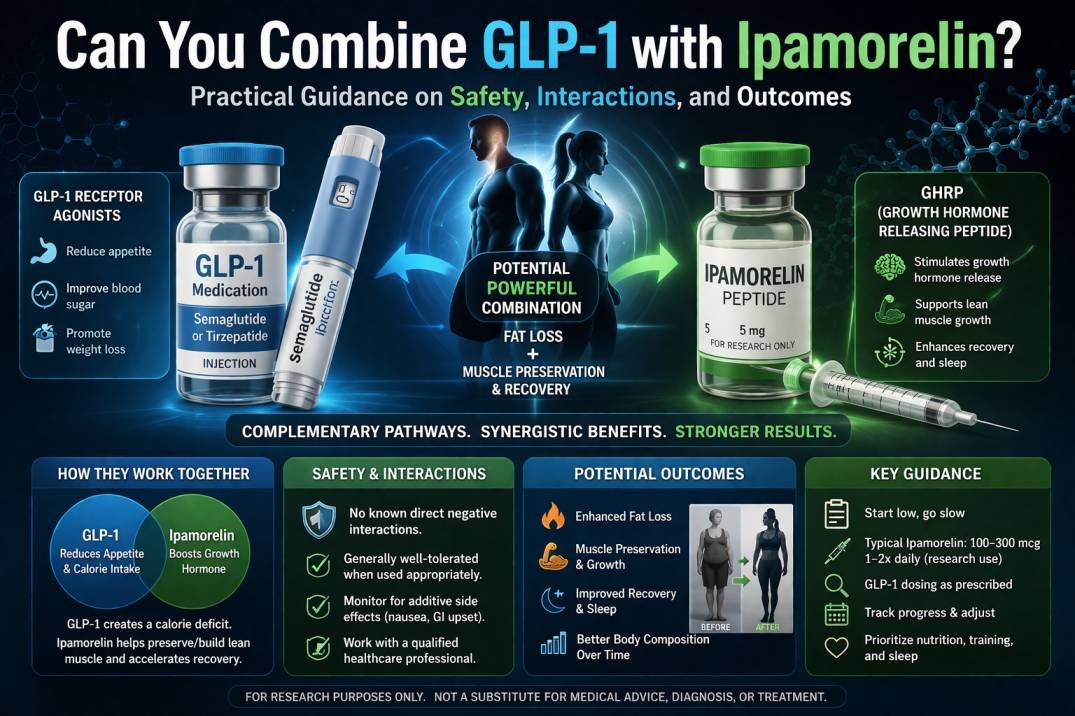
Some clinicians combine GLP-1 medications with ipamorelin to help preserve muscle while supporting weight loss. You can pair a GLP-1 with ipamorelin to potentially boost fat loss and protect lean mass, but it’s important to do this under medical supervision to keep dosing in check and watch for side effects.
Why do people even try this combo? Who stands to benefit, and what risks actually matter?
This article covers how each drug works, what you might get out of using both, safety issues, and what the evidence currently says (for better or worse).
Key Takeaways
- Combining the two can support fat loss while helping preserve muscle.
- Medical supervision is essential to balance benefits and risks.
- Evidence is growing but not yet definitive for widespread use.
What Is GLP-1?
GLP-1 is a hormone that influences your blood sugar, appetite, and digestion. It works by acting on specific receptors in your brain, pancreas, and gut, changing how your body processes food and handles glucose.
Mechanism of Action
GLP-1 (glucagon-like peptide-1) binds to receptors on cells in your pancreas, brain, stomach, and heart. In your pancreas, it ramps up insulin release when glucose is high and dials down glucagon, helping reduce blood sugar after meals.
In your brain, GLP-1 targets hunger centers and makes you feel full faster. In your stomach, it slows down how quickly food leaves, so you digest more gradually and avoid those big blood sugar spikes after eating.
Key points:
- Boosts insulin only when glucose is up.
- Suppresses glucagon to keep liver glucose output in check.
- Slows gastric emptying and cuts appetite.
Medical Uses
Doctors mainly prescribe GLP-1 receptor agonists for type 2 diabetes and weight management. Drugs like semaglutide and liraglutide can lower A1c and sometimes reduce the need for other diabetes meds.
For obesity, higher doses help people lose weight by lowering appetite and cutting calories. Some doctors also use them to reduce cardiovascular risk in certain patients with diabetes.
Other uses include treating chronic weight-related conditions, but always under medical supervision. You’ll usually take these as once-weekly or daily injections, or sometimes as an oral tablet. Your provider will pick the dose and form that fits your goals and side effect profile.
Potential Benefits
With GLP-1 therapy, you can expect tighter blood sugar control and usually fewer low blood sugar episodes compared to older diabetes drugs. A lot of people lose meaningful weight, especially when they combine the medication with diet tweaks and more activity.
Some folks see lower blood pressure and a bit better cholesterol. Certain GLP-1 drugs even show less risk of heart attack and stroke in people with type 2 diabetes and heart disease. Side effects like nausea and slower digestion are common, but they often get better after a few weeks.
Understanding Ipamorelin
Ipamorelin is a growth hormone secretagogue—basically, it nudges your body to release more of its own growth hormone. It acts on specific receptors in the brain and pituitary, and its effects matter for muscle, fat, sleep, and recovery.
How Ipamorelin Works
Ipamorelin binds to ghrelin (growth hormone secretagogue) receptors in your pituitary gland and hypothalamus. That triggers a cascade that boosts pulsatile growth hormone (GH) release—without actually giving you GH itself.
You get more of your own natural GH, following your body’s normal secretion patterns. Ipamorelin is pretty selective, causing less cortisol and prolactin release than older secretagogues.
Most people notice a predictable rise in GH and downstream IGF-1 over time. Dosing often lines up with sleep or workouts to amplify those natural GH pulses.
Common Applications
People use ipamorelin for a few main reasons. You might use it to help maintain or grow muscle while you’re dieting, to recover faster after exercise, or to sleep better and repair tissue.
Some folks try it for age-related GH decline, but always with medical supervision. Typical use includes combination therapy with resistance training and protein intake.
Doctors sometimes pair it with other agents for metabolic or body-composition goals, but they’ll keep an eye on your labs and symptoms. You should only use it if you’ve got someone tracking IGF-1, glucose, and any side effects.
Primary Effects
You can expect more GH pulses, a modest bump in IGF-1, and better lean mass retention. Many report falling asleep faster and recovering better after workouts.
Fat loss can happen indirectly as GH and IGF-1 shift metabolism and help maintain lean tissue. Side effects are usually mild—maybe a little redness where you inject, some brief water retention, or a slight uptick in hunger from ghrelin activity.
Cortisol or prolactin spikes are rare with ipamorelin compared to older peptides. Still, check labs and symptoms regularly to keep things safe.
Potential Synergy: Combining GLP-1 With Ipamorelin
Pairing a GLP-1 receptor agonist with ipamorelin is about combining appetite and glucose control with growth-hormone support. The idea is to preserve lean mass and avoid metabolic side effects, while keeping the perks of GLP-1 drugs.
Scientific Rationale
GLP-1 agonists like semaglutide and tirzepatide lower appetite and blood glucose by acting on the gut-brain axis and pancreas. Ipamorelin is a selective growth hormone releasing peptide (GHRP) that increases growth hormone (GH) and IGF-1, but doesn’t ramp up cortisol or prolactin much.
So, you get complementary effects: the GLP-1 agent curbs calorie intake and helps glycemic control, while ipamorelin might help preserve or build muscle, support metabolism, and improve sleep through GH pulses. This combo could help blunt muscle loss during rapid weight loss and keep your strength and energy up.
Known Interactions
No major direct pharmacologic interaction has popped up in clinical trials between GLP-1 agonists and ipamorelin. Still, you need to monitor things.
Potential things to watch for:
- Blood glucose: GLP-1 lowers it; ipamorelin can increase IGF-1, which might tweak insulin sensitivity.
- Fluid retention: GH signaling can cause mild fluid shifts—keep an eye on blood pressure and swelling.
- Hormone labs: Check IGF-1, fasting glucose, and maybe cortisol if any weird symptoms show up.
- Side effects overlap: GLP-1 can cause nausea, peptides can cause injection-site reactions.
Always use physician supervision, get baseline labs, and schedule follow-ups to catch surprises. Don’t adjust doses on your own.
Therapeutic Goals
Set clear, measurable goals before you start combo therapy.
Typical goals might be:
- Preserve lean body mass during weight loss (DEXA or bioimpedance helps track this).
- Maintain or improve strength and function (log your lifts or activity).
- Optimize metabolic markers: fasting glucose, HbA1c, lipids, IGF-1.
- Minimize GLP-1 side effects like fatigue or muscle loss.
You’ll want a monitoring plan:
- Get baseline labs, repeat at 8–12 weeks, and after dose changes.
- Track weight, body composition, and performance every 4–12 weeks.
- Adjust therapy based on how you respond and what the data shows.
Prioritize safety and set clear endpoints. If you’re not hitting your goals or you get side effects, consider tapering or stopping ipamorelin.
Benefits Of Dual Therapy
Combining a GLP-1 med with ipamorelin targets both metabolic control and body composition. You might notice changes in blood sugar, lean mass, appetite, and energy that you just won’t get from using either drug alone.
Metabolic Improvements
GLP-1 drugs help regulate glucose by boosting insulin when it’s needed and slowing how fast food leaves your stomach. This cuts down on big blood sugar spikes and can lower fasting glucose over time.
Ipamorelin increases growth hormone pulses, which can help with fat metabolism and sometimes support insulin sensitivity. Together, the combo might reduce insulin resistance more than GLP-1 alone for some folks.
You might see steadier glucose numbers and fewer big swings after meals. If you have diabetes or use other glucose-lowering meds, keep an extra-close eye on your blood sugar—combined effects can change what dose you need.
Weight Management Advantages
GLP-1 receptor agonists drive weight loss by cutting appetite and slowing digestion. Ipamorelin doesn’t blunt hunger directly, but it helps preserve or build muscle by increasing growth hormone signaling. Keeping muscle matters, since it keeps your resting metabolism higher as you lose weight.
Using both can lead to more fat loss while limiting muscle loss. That can improve your overall body composition—less fat, more (or at least maintained) muscle—compared to GLP-1 therapy alone. Track waist, scale, or DEXA if you can, not just weight, to really see the difference.
Impact on Appetite and Energy
Expect less hunger and smaller meals from the GLP-1 side. That usually kicks in within days to weeks after starting the med.
Ipamorelin might help you sleep better and recover faster, thanks to improved growth hormone patterns. That can make you feel more energetic and help with workout recovery.
Together, appetite suppression and better recovery can make it easier to stick to nutrition and exercise plans. Give yourself some time to adjust; energy might dip at first as your appetite changes, but it usually evens out as sleep and muscle recovery improve. Talk with your clinician about timing and dosing to balance appetite and daily energy.
Risks And Precautions
Combining a GLP-1 and ipamorelin can impact blood sugar, digestion, and growth hormone pathways. You’ll need to weigh possible side effects, any medical conditions that could make this unsafe, and what labs to check before and during treatment.
Side Effect Profile
GLP-1 drugs often trigger nausea, vomiting, constipation, and a drop in appetite. These issues can pop up or get worse when you add another peptide since changes in what you eat and how your body burns calories may ramp up GI symptoms.
Ipamorelin usually causes water retention, mild joint pain, and sometimes redness at the injection site. It can nudge fasting growth hormone and IGF-1 up a bit, which might shift how some people handle glucose.
If you combine these, look out for more fatigue, dizziness, or lightheadedness—lower blood sugar or dehydration could be to blame. If you get severe nausea, ongoing vomiting, or intense abdominal pain that shoots to your back, reach out to your provider right away.
Contraindications
Skip GLP-1 drugs if you or a family member has medullary thyroid carcinoma or MEN2 syndrome. These conditions bump up the risk of thyroid C-cell tumors with certain GLP-1 agonists.
Don’t use ipamorelin if you have active cancer (unless your oncologist signs off), uncontrolled diabetes with frequent lows, or a history of some pituitary disorders. Mixing these therapies can make cancer monitoring and hormone control a lot trickier.
Steer clear of the combination if you’re pregnant, breastfeeding, or planning to be. If you’re on other meds with tight dose requirements, check for interactions first—GLP-1s slow stomach emptying and can change how your body absorbs other drugs.
Monitoring and Safety Considerations
Before you start, get baseline labs: fasting glucose or A1c, a metabolic panel, IGF-1, and thyroid tests if needed. Track your weight, blood pressure, and any GI symptoms you already have.
While on treatment, check your blood sugar regularly in the first few weeks, especially if you use insulin or sulfonylureas. Check IGF-1 every 1–3 months while taking ipamorelin to avoid too much hormone exposure.
Watch for signs of pancreatitis or gallbladder trouble. If you get ongoing GI issues, new severe joint pain, vision changes, or lose weight way too fast, stop the meds and call your doctor.
Keep a list of all your meds and supplements handy. Only change doses with your doctor’s okay, and plan on regular check-ins every month or so until things settle down.
Clinical Evidence And Research Findings
There’s not much direct research on combining GLP-1 agonists with ipamorelin. Most info comes from separate studies, a few small observational reports, and some educated guesses about effects on weight, muscle, and metabolism.
Published Studies
No large randomized trials test GLP-1 receptor agonists and ipamorelin together. Most published work focuses on GLP-1 agonists (semaglutide, liraglutide, tirzepatide) for diabetes and weight loss—these show strong effects on appetite and blood sugar control.
Ipamorelin evidence is limited to small clinical or animal studies, usually looking at growth hormone release, sleep, and muscle preservation. A handful of case reports and practice guides mention pairing ipamorelin or CJC-1295/ipamorelin with GLP-1s to help prevent muscle loss during weight loss, but those are anecdotal and have mixed results. No peer-reviewed trials confirm if the combo is safe or works well.
Limitations of Current Data
There are big gaps here. Nobody’s run large, placebo-controlled studies on drug–drug interactions, dose timing, or long-term safety for GLP-1s and ipamorelin together.
Most reports come from compounding pharmacies, practitioner guides, or tiny groups with short follow-up. Key safety questions—like effects on the heart, glucose swings, GH-related side effects, or cancer risk—just haven’t been studied in combination. Dosing, GLP-1 agent choice, and patient differences also make it tough to predict who might benefit or run into trouble.
Areas for Future Investigation
Research should focus on randomized trials comparing GLP-1 alone versus GLP-1 plus ipamorelin. Important things to look at: lean mass retention, strength, resting metabolism, and how patients actually feel—like fatigue and sleep. Trials should separate out different GLP-1 agents and doses, since semaglutide and tirzepatide aren’t identical.
Safety studies need to track glucose swings, heart rhythm, IGF-1 and GH levels, and possible tumor markers for at least a year or two. Mechanistic work could help clarify if ipamorelin really counters GLP-1–related muscle loss using GH pathways. We need bigger studies, better protocols, and independent funding to keep bias in check.
Dosage And Administration Guidelines
Clear steps matter when you mix a GLP-1 agonist with ipamorelin. Stick to specific injection timing, start low, and only adjust under medical supervision.
Recommended Protocols
Start ipamorelin with a low dose—usually 100–300 mcg per injection, 2–3 times a day subcutaneously. Most people take it before bed and/or before meals or workouts to match natural GH surges and help keep muscle while using GLP-1s.
For GLP-1 meds (semaglutide, tirzepatide, etc.), follow your prescriber’s titration plan. Don’t mess with your GLP-1 dose just because you’re starting ipamorelin. If you or your doctor tweak ipamorelin, do it in small steps (about 50–100 mcg at a time) and wait a week or two to see how you feel.
Always use separate syringes for each drug unless your doctor says it’s okay to mix. Rotate injection spots. Jot down doses, times, and any side effects to help guide safe adjustments.
Supervision and Medical Oversight
Get baseline labs before you start combining: fasting glucose/HbA1c, IGF-1, liver and kidney function, and a metabolic panel. Check IGF-1 and glucose again at 6–12 weeks after starting or changing doses.
Be alert for symptoms that need quick attention: new severe headaches, vision changes, big joint pain, swelling, unexplained fatigue, or big swings in blood sugar. Report ongoing nausea, vomiting, or rapid weight loss.
Work with a clinician who knows peptide therapy and GLP-1 drugs. They should approve doses, check your labs, and watch for drug interactions. Stick to your appointment schedule and don’t change doses on your own.
Who Should Consider Combining GLP-1 With Ipamorelin?
If you’re aiming for stronger fat loss but want to keep muscle and energy, combining a GLP-1 drug with ipamorelin might help. Talk with a clinician to tailor doses, timing, and monitoring to your goals.
Patient Profiles
You might be a candidate if you’re using a GLP-1 (like semaglutide or tirzepatide) and notice muscle loss, weakness, or low energy even as you lose weight. Folks trying to hold onto or build muscle—especially when cutting calories—could benefit, since ipamorelin boosts GH pulses that help muscle and recovery.
Athletes or active adults who need to keep strength while dropping body fat often consider this combo. Older adults losing muscle (sarcopenia) on GLP-1s might fit too, but start low and monitor closely. Always get baseline labs (glucose, IGF-1, electrolytes) and a follow-up plan before starting.
Special Considerations for Certain Medical Conditions
If you have diabetes, combining these drugs will affect blood sugar and your medication plan. GLP-1s lower glucose; ipamorelin doesn’t do much to glucose directly but can shift insulin sensitivity. Check your targets and adjust diabetes meds with your doctor.
Be extra careful or avoid if you have active cancer, uncontrolled pituitary disease, or a history of GH-sensitive tumors. Also, use caution with serious heart disease, sleep apnea, or untreated thyroid issues—both drugs can change fluid balance, heart rate, and metabolism. If you’re on several prescriptions (anticoagulants, SGLT2 inhibitors, or other peptides), review all interactions and monitoring plans with your provider.
Legal And Regulatory Aspects
Laws and regulations shape how you get GLP-1 drugs and ipamorelin, who can prescribe them, and how compounding pharmacies handle them. Watch for prescription rules, FDA actions, and state laws—they can limit access or require specific oversight.
Prescription Status
GLP-1 receptor agonists (like semaglutide) and ipamorelin usually need a prescription in the U.S. GLP-1 drugs are FDA-approved for diabetes and weight loss—you’ll need a valid medical reason and a prescriber’s order.
Ipamorelin isn’t FDA-approved as a treatment. You’ll mostly find it through research suppliers or compounding pharmacies. Compounding rules change by state and pharmacy, and the FDA’s tightened controls on some peptides. Always check that your prescriber documents the need and the pharmacy follows state and USP compounding standards before you fill a script.
Professional Oversight Requirements
A licensed clinician should manage any combined plan. They need to review your medical history, current meds, and relevant labs (glucose, HbA1c, pituitary function) before you start.
If you use a compounding pharmacy for ipamorelin, expect extra safeguards: a valid prescription, clear rationale, and pharmacy compliance with state and USP <797>/<800> rules. Your prescriber should schedule follow-ups for dose changes and monitor for issues like hypoglycemia, blood pressure swings, or hormonal side effects. Keep copies of your prescriptions and labs in case of a regulatory check.
Conclusion
You can combine GLP-1 drugs and ipamorelin, but only if you’ve got medical supervision. Both can help with body composition, but they work differently and can affect blood sugar, appetite, and muscle in unique ways.
Talk with a clinician who understands both therapies. They’ll go over your meds, health history, and goals, then set up doses and timing to help you get the most benefit with the least risk.
Expect closer check-ins at first. Your provider may monitor glucose, weight, and hormone-related symptoms more often and tweak your plan if you run into side effects.
If you feel dizzy, notice a rapid heart rate, get low blood sugar, or feel unusually wiped out, call your clinician right away. Don’t make changes on your own—hold off on adjusting injections or doses without guidance.
Key points to discuss with your clinician:
- Your goals and what’s realistic
- Potential drug interactions and side effects
- How you’ll be monitored and how often
Make your decisions based on safety, the evidence, and what matters most for your health. Your clinician can help you figure out if this combo fits your plan.
Frequently Asked Questions
These answers cover safety, interactions, side effects, dosing patterns when stacking peptides with GLP-1 drugs, which peptides clinicians usually pair with GLP-1s, and the current US regulatory status for ipamorelin.
Is it safe to use a GLP-1 medication alongside peptide therapies like ipamorelin?
Yeah, a lot of clinicians combine GLP-1 drugs (like semaglutide or tirzepatide) with peptides such as ipamorelin.
They work through different pathways, so there’s no direct pharmacologic conflict here.
Still, you absolutely want a clinician keeping an eye on things. Mixing treatments can shift side effects or change goals, like keeping muscle while losing weight.
Are there known drug–peptide interactions between semaglutide or tirzepatide and growth hormone secretagogues?
So far, nobody’s spotted direct drug–peptide interactions between GLP-1 agonists and ipamorelin.
They don’t share metabolic enzymes or clearance routes that would set up a predictable interaction.
Even so, clinicians keep an eye out for overlapping effects on appetite, metabolism, or glucose control whenever people use them together. Better safe than sorry, right?
What side effects should be monitored when combining a GLP-1 medication with ipamorelin?
First things first: watch for GI symptoms—nausea, vomiting, diarrhea, or appetite loss—since GLP-1 drugs often cause those.
Ipamorelin can bring on injection-site reactions, headaches, water retention, or joint discomfort for some folks.
If you have diabetes or take other glucose-lowering meds, keep tabs on your blood sugar. Let your provider know if you notice new fatigue, dizziness, or weird changes in weight or fluid levels.
How do dosing schedules typically differ when stacking a GLP-1 medication with CJC-1295 and ipamorelin?
GLP-1 meds stick to their standard schedules: usually weekly injections for semaglutide or tirzepatide.
Peptides like ipamorelin and CJC-1295 are given more often—daily or even several times a day, depending on the plan.
Most clinicians start one therapy first to see how you handle it, then add peptides once any GI side effects calm down. Always follow your provider’s timing and injection instructions—don’t just wing it.
What peptides are most commonly paired with GLP-1 medications for fat loss or body composition goals?
CJC-1295 with ipamorelin gets used a lot to support growth hormone release and help preserve lean mass during weight loss.
Some clinicians mention BPC-157 for tissue support and MOTS-C for metabolism, though honestly, the evidence for those isn’t super strong yet.
Talk through your goals with your provider so you can figure out the safest and most fitting peptide combo for you.
What are the current FDA and regulatory concerns surrounding ipamorelin use in the United States?
Ipamorelin isn’t FDA-approved for general clinical use.
So, the FDA hasn’t officially signed off on its dosing, safety, or effectiveness.
You can only get ipamorelin through research studies or certain compounding and clinic channels that follow state and federal rules.
If you’re considering it, definitely ask your clinician about its legal status, where it’s coming from, and what quality controls are in place. Better safe than sorry, right?