Address
30 N Gould St.
Suite R, Sheridan, WY 82801, USA

What Is NAD+? Research Uses, Cellular Energy, Benefits, Safety, and Peptide Study Applications

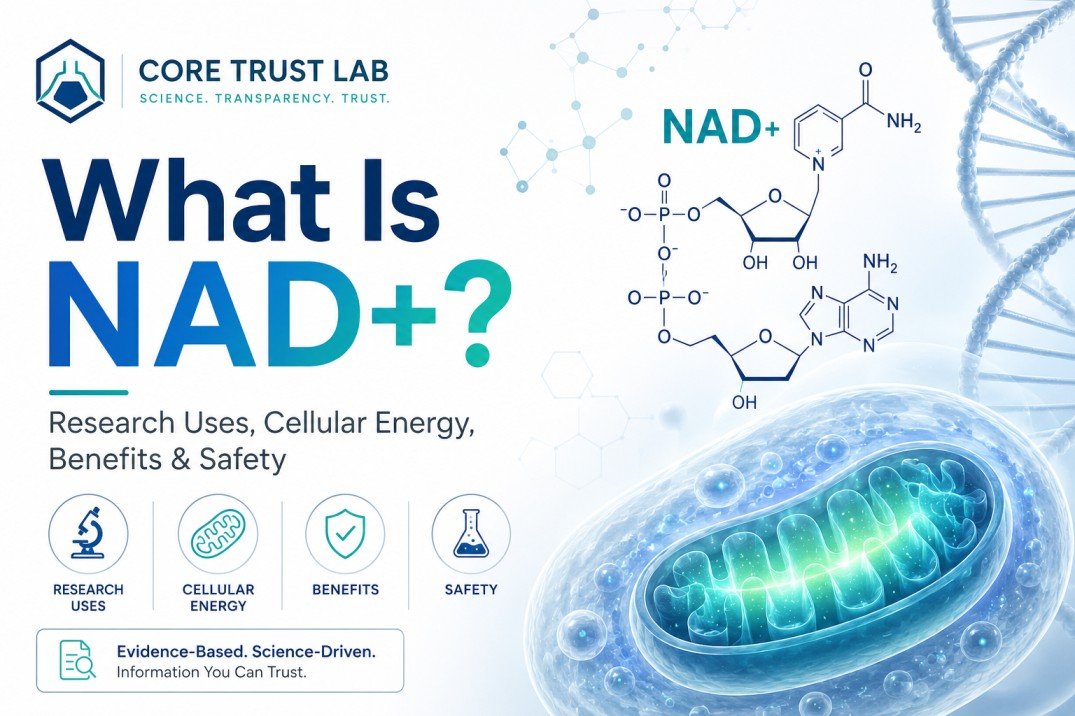
NAD+ has become one of the most discussed molecules in cellular energy, longevity, metabolism, and recovery research. It is often mentioned alongside peptides, mitochondrial support compounds, and anti-aging research because of its central role in how cells produce energy and respond to biological stress.
However, NAD+ is often misunderstood.
NAD+ is not technically a peptide. It is a coenzyme found in living cells. Its full name is nicotinamide adenine dinucleotide, and it plays an essential role in energy metabolism, redox balance, DNA repair, cellular signaling, and mitochondrial function. Research reviews describe NAD+ as an important cofactor involved in many biological processes, including cellular metabolism and NAD-dependent signaling pathways.
Because NAD+ is connected with cellular energy and aging-related pathways, it has attracted strong interest in research settings. Scientists study NAD+ and NAD+-related compounds to better understand mitochondrial health, metabolic function, oxidative stress, DNA repair, and age-associated biological changes.
This guide explains what NAD+ is, how it works, why it is important for cellular energy studies, how it relates to peptide research, and what current evidence suggests about its potential benefits and safety considerations.
Quick Answer: What Is NAD+?
NAD+ is a coenzyme that helps cells transfer electrons during metabolic reactions. This makes it important for cellular energy production, especially in pathways connected with mitochondrial function.
In simple terms, NAD+ helps cells convert nutrients into usable energy.
It also serves as a substrate for enzymes involved in DNA repair, cellular stress responses, inflammation-related signaling, and metabolic regulation. Research on the human NAD metabolome describes NAD-mediated regulatory processes as broad, including enzyme regulation, gene expression control, DNA repair, cell cycle regulation, and calcium signaling.
NAD+ is commonly studied in relation to:
- Cellular energy metabolism
- Mitochondrial function
- DNA repair
- Oxidative stress
- Healthy aging research
- Metabolic health
- Recovery and cellular resilience
- NAD+ precursor supplementation
Although NAD+ is often discussed in peptide and wellness communities, it should be understood accurately: NAD+ is a coenzyme, not a peptide.
What Does NAD+ Stand For?
NAD+ stands for nicotinamide adenine dinucleotide.
The “+” symbol refers to its oxidized form. NAD+ can accept electrons and become NADH, its reduced form. This NAD+/NADH cycling is central to redox reactions, which are chemical reactions involved in energy production and metabolic balance.
The two main forms are:
- NAD+: the oxidized form
- NADH: the reduced form
This cycle helps support reactions involved in energy production, particularly in mitochondria, where cells generate ATP.
ATP is often described as the usable energy currency of the cell. Without enough NAD+ activity, many energy-related reactions would not work efficiently.
Why Is NAD+ Important for Cellular Energy?
NAD+ is important because it helps transfer electrons during the process of converting food-derived nutrients into cellular energy.
When carbohydrates, fats, and proteins are metabolized, cells extract energy from them through a series of biochemical pathways. NAD+ participates in these pathways by accepting and donating electrons.
This is especially important in:
- Glycolysis
- The citric acid cycle
- Oxidative phosphorylation
- Mitochondrial energy production
- Cellular redox balance
Mitochondria rely on electron transfer reactions to help produce ATP. NAD+ and NADH are central to this process because they help shuttle electrons through energy-producing pathways.
This is one reason NAD+ is commonly discussed in relation to cellular energy, fatigue research, exercise recovery, metabolism, and age-associated changes in cellular function.
NAD+ and Mitochondrial Function
Mitochondria are often called the powerhouses of the cell because they help generate ATP. NAD+ plays a major role in mitochondrial function by supporting reactions that help convert nutrients into energy.
When NAD+ levels or NAD+ availability are disrupted, researchers are interested in how that may affect mitochondrial efficiency, oxidative stress, and cellular resilience.
NAD+ is also compartmentalized across different areas of the cell, including the cytosol, mitochondria, and nucleus. Recent research continues to examine how NAD+ concentrations differ across cellular compartments and how these differences may affect metabolism, DNA repair, redox balance, and signaling.
This makes NAD+ more than a simple “energy molecule.” It is part of a complex cellular network that influences how cells produce energy, repair damage, and respond to stress.
NAD+ and DNA Repair
One of the major reasons NAD+ receives attention in aging and cellular health research is its connection with DNA repair.
Cells experience DNA damage from normal metabolism, oxidative stress, environmental exposure, and replication errors. The body has repair systems to help manage this damage.
Certain NAD+-dependent enzymes use NAD+ as part of their activity. These enzymes are involved in processes such as DNA repair, stress response, and cellular regulation.
This does not mean NAD+ automatically prevents aging or disease. It means NAD+ is scientifically important because it participates in pathways that researchers study when examining cellular maintenance and repair.
Balanced wording is important here. NAD+ should not be described as a guaranteed anti-aging solution. It is more accurate to describe NAD+ as a key molecule involved in cellular processes relevant to aging and repair research.
NAD+ and Healthy Aging Research
NAD+ has become strongly associated with healthy aging research because studies suggest NAD+ biology may change with age. Scientists are interested in whether supporting NAD+ pathways may influence metabolic health, mitochondrial function, inflammation-related pathways, cellular resilience, and age-associated decline.
However, human evidence is still developing.
A 2025 review on NAD+ precursor supplementation in human aging noted that although preclinical studies support NAD+ precursors as a promising strategy, human clinical trials have shown limited efficacy so far.
This is an important point for readers.
Many online discussions make NAD+ sound like a proven anti-aging breakthrough. The research is more nuanced. NAD+ biology is clearly important, but clinical outcomes in humans are still being studied, and results may vary depending on the compound, dose, delivery method, health status, age, and research design.
The most accurate way to discuss NAD+ is this:
NAD+ is an essential molecule involved in cellular energy, metabolism, and repair-related pathways. It is highly relevant to aging research, but current human evidence does not support exaggerated claims that NAD+ can reliably reverse aging or cure age-related conditions.
NAD+ vs NAD+ Precursors
Many people use the term “NAD+” broadly, but research often focuses on NAD+ precursors rather than NAD+ itself.
NAD+ precursors are compounds that the body can use to help produce NAD+. Common examples include:
- Nicotinamide riboside
- Nicotinamide mononucleotide
- Niacin
- Nicotinamide
Research reviews describe NAD+ precursors such as nicotinamide riboside and nicotinamide mononucleotide as compounds studied for their ability to boost NAD+ abundance in preclinical and human research settings.
The distinction matters because NAD+ and NAD+ precursors are not always studied in the same way. Delivery method, bioavailability, metabolism, and tissue-specific effects can all influence research outcomes.
Is NAD+ a Peptide?
No. NAD+ is not a peptide.
A peptide is made of amino acids linked together by peptide bonds. NAD+ is a coenzyme made from nucleotide-related components. It belongs to a different biological category.
However, NAD+ is often discussed alongside peptides because both appear in research conversations about:
- Cellular health
- Recovery
- Metabolism
- Aging-related pathways
- Mitochondrial function
- Body-composition research
- Performance and wellness studies
This is why NAD+ may appear on research-focused platforms that also discuss peptides such as Ipamorelin, AOD-9604, CJC-1295, and TB-500.
Readers interested in peptide-based body-composition research may also find What Is AOD-9604? helpful.
How NAD+ Fits Into Peptide Study Applications
Although NAD+ is not a peptide, it may still fit into broader peptide study applications because many research areas overlap.
For example, peptide research may focus on growth hormone pathways, recovery, tissue repair, fat metabolism, or metabolic signaling. NAD+ research may focus on cellular energy, mitochondrial function, DNA repair, and redox balance.
Together, these areas can help researchers understand different aspects of biological performance and cellular maintenance.
NAD+ Research Focus
NAD+ is commonly studied for:
- Cellular energy production
- Mitochondrial function
- DNA repair pathways
- Redox balance
- Cellular stress response
- Aging-related biology
Peptide Research Focus
Peptides are often studied for:
- Growth hormone signaling
- Tissue repair
- Recovery pathways
- Fat-metabolism research
- Appetite and metabolic signaling
- Body-composition mechanisms
For example, Ipamorelin vs Semaglutide: Key Differences in Fat Loss and Body Composition explains how peptide and GLP-1 pathways may differ in body-composition research.
NAD+ and Recovery Research
NAD+ is often discussed in recovery-focused research because cellular repair, energy production, and mitochondrial efficiency are all important for biological recovery.
Recovery is not just about muscles. It also involves:
- Energy metabolism
- Cellular repair
- Oxidative stress balance
- Inflammatory signaling
- Sleep quality
- Nutrient availability
- Mitochondrial function
NAD+ may be relevant to recovery research because it participates in cellular processes that help maintain energy balance and repair-related signaling. However, this does not mean NAD+ should be described as a guaranteed recovery enhancer.
A more accurate statement is that NAD+ is being studied for its role in cellular pathways that may be relevant to recovery, resilience, and metabolic function.
Readers interested in recovery-focused peptide research may also want to read TB-500 Peptide: Benefits for Recovery, Fat Loss Support, and How It Fits with GLP-1 Therapy.
Potential Benefits Studied in NAD+ Research
NAD+ research is broad, and different studies examine different outcomes. Some areas of interest include cellular energy, metabolism, aging-related pathways, mitochondrial function, and DNA repair.
Potential research areas include:
- Supporting cellular energy pathways
- Understanding mitochondrial function
- Studying DNA repair mechanisms
- Exploring age-associated NAD+ decline
- Investigating oxidative stress pathways
- Examining metabolic flexibility
- Evaluating cellular resilience
- Studying NAD+ precursor effects
It is important to separate “research interest” from proven human outcomes.
NAD+ is biologically important, but that does not automatically mean every NAD+ product or protocol produces dramatic clinical benefits. Current research is still developing, especially when it comes to translating cellular mechanisms into consistent human outcomes.
Safety Considerations for NAD+ Research
NAD+ and NAD+-related compounds should be discussed carefully, especially when delivery methods such as injections or infusions are involved.
The FDA has reported adverse events following the use of NAD+ injectable drugs, including severe chills, shaking, vomiting, and fatigue, with some cases requiring medical treatment.
This does not mean all NAD+ research is unsafe. It means safety depends heavily on formulation quality, route of administration, sterility, dose, supervision, and individual health factors.
Important safety considerations include:
- Product quality
- Sterility for injectable preparations
- Route of administration
- Individual medical history
- Medication interactions
- Research setting and supervision
- Adverse event monitoring
NAD+ should not be presented as risk-free. Any research-use discussion should clearly separate cellular biology from unsupported therapeutic claims.
Common Misconceptions About NAD+
Misconception 1: NAD+ Is a Peptide
NAD+ is not a peptide. It is a coenzyme involved in cellular metabolism and redox reactions.
Misconception 2: NAD+ Directly Gives You Energy Like Caffeine
NAD+ does not work like a stimulant. It supports biochemical pathways involved in cellular energy production, but it should not be compared directly with caffeine or other stimulants.
Misconception 3: NAD+ Is Proven to Reverse Aging
NAD+ is important in aging-related research, but it should not be described as a proven anti-aging cure. Human clinical evidence remains more limited than many marketing claims suggest.
Misconception 4: More NAD+ Is Always Better
Biology is not that simple. NAD+ balance, tissue-specific effects, delivery method, and metabolic context all matter.
Misconception 5: All NAD+ Products Work the Same Way
Different NAD+ compounds, precursors, routes of administration, and formulations may behave differently. Research findings from one form should not automatically be applied to every product or protocol.
NAD+ vs GLP-1 and Peptide Research
NAD+ is sometimes discussed near GLP-1 medications and peptides because all three areas are connected to metabolism, energy balance, and body-composition research. However, they belong to different biological categories.
GLP-1 medications such as Semaglutide and Tirzepatide are studied for appetite regulation, insulin secretion, glucagon reduction, gastric emptying, and metabolic outcomes.
Peptides such as AOD-9604 or Ipamorelin are studied through different pathways, such as fat-metabolism research or growth hormone signaling.
NAD+ is different from both. It is a coenzyme involved in cellular energy and redox biology.
For readers exploring GLP-1-related topics, GLP-1 Medications Explained provides a useful overview.
Frequently Asked Questions
What is NAD+?
NAD+ stands for nicotinamide adenine dinucleotide. It is a coenzyme found in cells and plays an important role in energy metabolism, redox balance, DNA repair, and cellular signaling.
Is NAD+ a peptide?
No. NAD+ is not a peptide. It is a coenzyme. However, it is often discussed alongside peptides in research settings because both are connected with cellular health, metabolism, recovery, and aging-related studies.
Why is NAD+ important for cellular energy?
NAD+ helps transfer electrons during metabolic reactions. This makes it important for energy-producing pathways, especially those connected with mitochondrial ATP production.
What is the difference between NAD+ and NADH?
NAD+ is the oxidized form, while NADH is the reduced form. These two forms cycle back and forth during redox reactions that support metabolism and cellular energy production.
What are NAD+ precursors?
NAD+ precursors are compounds the body can use to help produce NAD+. Common examples include nicotinamide riboside, nicotinamide mononucleotide, niacin, and nicotinamide.
Is NAD+ used in anti-aging research?
Yes. NAD+ is widely studied in aging-related research because of its role in cellular metabolism, mitochondrial function, DNA repair, and stress-response pathways. However, it should not be described as a proven anti-aging cure.
Is NAD+ safe?
Safety depends on the form, quality, route of administration, dose, and research setting. Injectable NAD+ products require particular caution because sterility, formulation quality, and adverse event monitoring are important.
How does NAD+ relate to peptide research?
NAD+ is not a peptide, but it is often discussed alongside peptides because both are studied in areas such as recovery, metabolism, cellular health, and body-composition research.
Final Thoughts: What Is NAD+?
NAD+ is an essential coenzyme involved in cellular energy, mitochondrial function, redox balance, DNA repair, and cellular signaling. It plays a central role in how cells convert nutrients into usable energy and how they respond to biological stress.
Although NAD+ is often discussed in peptide and wellness communities, it is not technically a peptide. It belongs to a different biological category and should be described accurately.
NAD+ research is promising because it connects with important areas such as cellular energy, metabolism, healthy aging, mitochondrial function, and recovery-related pathways. However, human evidence is still developing, and exaggerated claims should be avoided.
The most accurate way to understand NAD+ is as a foundational molecule in cellular biology that remains highly relevant to modern research on energy, aging, metabolism, and cellular resilience.
For readers who want to explore related research topics, What Is AOD-9604? and TB-500 Peptide are useful next reads.