Address
30 N Gould St.
Suite R, Sheridan, WY 82801, USA

How Long Before Bed Should You Take Ipamorelin?

Ipamorelin has become one of the most discussed peptides among individuals interested in recovery, body composition, and growth hormone support. As more people explore peptide-based wellness protocols, questions about the ideal timing of administration continue to grow.
One of the most common questions is: How long before bed should you take Ipamorelin?
Many peptide users choose nighttime administration because growth hormone release naturally increases during sleep. However, there is often confusion about whether Ipamorelin should be taken immediately before bed, 30 minutes before bed, or even earlier in the evening.
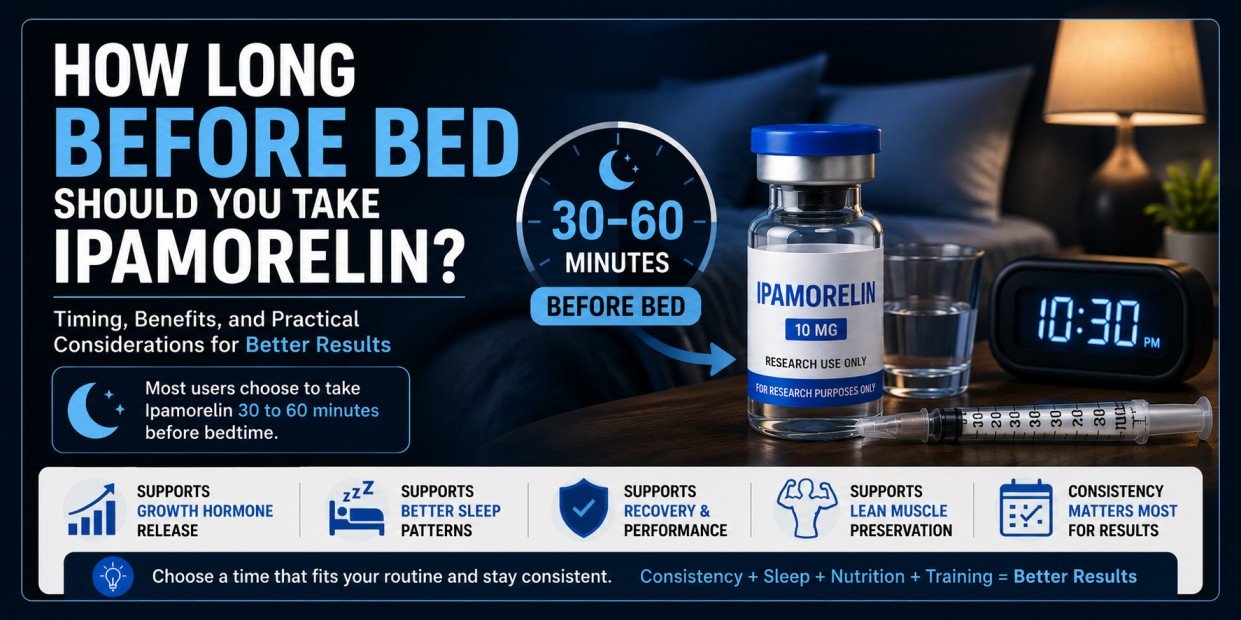
The good news is that there is no universally perfect timing. While many users prefer taking Ipamorelin approximately 30–60 minutes before bedtime, consistency and adherence to a routine often matter more than the exact minute of administration.
If you’re new to peptide timing strategies, our article on Best Time to Take Ipamorelin: Timing, Benefits, and Practical Administration Tips provides a broader overview of how different administration schedules may fit into a wellness routine.
In this guide, we’ll explore why bedtime is a popular choice, whether timing affects results, practical considerations for building a routine, and how Ipamorelin fits into broader recovery and body composition strategies.
Quick Answer: How Long Before Bed Should You Take Ipamorelin?
Many peptide users choose to take Ipamorelin approximately 30 to 60 minutes before bedtime as part of a consistent evening routine.
However, timing may vary depending on:
- Personal schedule
- Daily routine
- Meal timing
- Individual protocol
The most important factor is consistency.
A simple rule many users follow is:
Choose a time before bed that you can maintain consistently every day rather than focusing on finding the “perfect” minute.
What Is Ipamorelin?
Ipamorelin is a growth hormone secretagogue that stimulates the body’s natural release of growth hormone.
Unlike direct growth hormone administration, Ipamorelin works by encouraging natural growth hormone pulses through specific receptor pathways.
Because of this mechanism, Ipamorelin is frequently discussed in relation to:
- Recovery support
- Lean mass preservation
- Body composition goals
- Exercise performance
- Wellness-focused protocols
If you’re unfamiliar with the peptide, our detailed guide on What Is Ipamorelin Peptide? Benefits, Fat Loss Potential, and How It Works explains its mechanism, potential uses, and why it has become popular within peptide communities.
Why Is Bedtime a Popular Time for Ipamorelin?
One reason bedtime administration receives significant attention is the body’s natural growth hormone rhythm.
Growth hormone is released in pulses throughout the day, with some of the largest pulses naturally occurring during sleep.
Because of this, many individuals choose to incorporate Ipamorelin into a nighttime routine.
Potential advantages of bedtime administration include:
- Easy routine development
- Consistent scheduling
- Recovery-focused habits
- Alignment with sleep patterns
It’s important to remember that bedtime administration is popular, but it is not necessarily the only option.
For example, some individuals prefer morning or afternoon administration based on work schedules, training habits, or lifestyle needs. We explore these scenarios in Can You Take Ipamorelin During the Day?, where we discuss how daytime administration may fit into different routines.
Does the Exact Timing Before Bed Matter?
Many people spend a significant amount of time trying to determine whether 15 minutes, 30 minutes, or 60 minutes before bed is ideal.
In practice, the difference between these time windows may be less important than maintaining a consistent schedule.
Taking Ipamorelin 15 Minutes Before Bed
Potential advantages:
- Convenient
- Easy to remember
- Fits naturally into bedtime routines
Taking Ipamorelin 30 Minutes Before Bed
This is one of the most commonly discussed timing windows.
Benefits include:
- Easy integration into an evening routine
- Time to relax before sleep
- Consistent scheduling
Taking Ipamorelin 60 Minutes Before Bed
Some users prefer taking Ipamorelin earlier in the evening.
Potential advantages:
- More flexibility
- Easier planning
- Fits structured evening routines
The Most Important Factor
Regardless of whether you choose 15, 30, or 60 minutes before bed, consistency is often more important than the exact timing itself.
A protocol followed regularly is generally more beneficial than constantly adjusting your schedule in search of a perfect timing strategy.
Should You Take Ipamorelin on an Empty Stomach Before Bed?
Many peptide protocols discuss taking Ipamorelin when the stomach is relatively empty.
This recommendation is often based on discussions surrounding growth hormone release and nutrient timing.
Practical considerations include:
- Avoiding very large meals immediately beforehand
- Following a consistent routine
- Monitoring individual response
Because protocols can vary, it is always important to follow professional guidance when applicable.
A future Core Trust Lab article will explore this topic in greater detail, including meal timing strategies and common questions surrounding bedtime administration.
Bedtime vs Daytime Ipamorelin: Which Is Better?
A common question among peptide users is whether nighttime administration is superior to taking Ipamorelin during the day.
The reality is that both approaches may fit different lifestyles and goals.
| Factor | Before Bed | During the Day |
|---|---|---|
| Popularity | High | Moderate |
| Convenience | Often easy | Depends on schedule |
| Consistency Potential | High | Varies |
| Recovery Focus | Commonly discussed | Also possible |
| Flexibility | Moderate | High |
For many individuals, bedtime administration is simply easier to remember. However, people with shift work schedules, travel-heavy routines, or inconsistent sleep patterns may find daytime administration more practical.
The most important takeaway is that consistency often matters more than choosing a specific hour.
Common Mistakes When Timing Ipamorelin
Many people focus heavily on timing while overlooking habits that may have a much larger impact on results.
Constantly Changing Administration Times
Switching between morning, afternoon, and nighttime administration makes it difficult to build a consistent routine.
A stable schedule can make it easier to:
- Track progress
- Monitor recovery
- Evaluate your overall protocol
Missing Doses Frequently
Choosing a schedule that doesn’t fit your lifestyle can lead to poor adherence.
Rather than chasing the perfect timing strategy, choose a routine you can realistically maintain.
Ignoring Sleep Quality
Sleep remains one of the most important recovery factors.
Even the best peptide protocol cannot compensate for:
- Poor sleep habits
- Chronic sleep deprivation
- Inconsistent sleep schedules
Ignoring Nutrition
Recovery and body composition goals are heavily influenced by nutrition.
Protein intake, meal quality, and overall dietary habits often have a greater influence on outcomes than peptide timing.
Can Timing Affect Body Composition Goals?
Many people researching Ipamorelin are interested in:
- Fat loss
- Lean mass preservation
- Recovery support
- Performance optimization
While timing may help establish consistency, body composition outcomes are generally influenced by a combination of factors.
These include:
- Nutrition
- Exercise
- Sleep
- Recovery
- Long-term adherence
For individuals comparing peptide-based approaches with GLP-1 medications, our article on Ipamorelin vs Semaglutide: Key Differences in Fat Loss and Body Composition provides a detailed comparison of these different strategies.
Similarly, some individuals explore whether peptide protocols can be discussed alongside GLP-1 therapies. Our guide Can You Combine GLP-1 with Ipamorelin? Practical Guidance on Safety, Interactions, and Outcomes examines this topic in greater detail.
Combining Ipamorelin With Other Peptides
Ipamorelin is frequently discussed alongside other peptide compounds.
One of the most common combinations is the CJC-1295 and Ipamorelin Stack, which is often researched because both peptides are associated with growth hormone-related pathways.
If you’re interested in learning more about this combination, see our detailed article:
CJC-1295 and Ipamorelin Stack: Benefits, Protocols, and Safety Considerations
Many individuals also explore recovery-focused compounds such as TB-500 (Thymosin Beta-4).
Recovery and tissue-support peptides are frequently researched by individuals interested in exercise recovery and performance support.
You may find these related articles useful:
- TB-500 Peptide: Benefits for Recovery, Fat Loss Support, and How It Fits with GLP-1 Therapy
- TB-500 vs BPC-157: Comparative Benefits, Uses, and Safety Considerations
- Can TB-500 Help with Joint Pain and Recovery?
Together, these resources help build a broader understanding of peptide-based recovery strategies.
Product Spotlight: Ipamorelin 10mg
Individuals interested in peptide research may wish to explore the Ipamorelin 10mg product available through Core Trust Lab.
Potential areas of research interest include:
- Growth hormone-related pathways
- Recovery support
- Body composition studies
- Wellness-focused peptide protocols
For more information, visit the Ipamorelin 10mg product page and review the available educational resources.
Practical Tips for Building a Consistent Night Routine
Regardless of whether you choose 15, 30, or 60 minutes before bedtime, consistency is often the key factor.
Prioritize Sleep
Recovery-focused protocols work best when paired with quality sleep habits.
Consider:
- Consistent bedtimes
- Limiting screen exposure before sleep
- Maintaining a comfortable sleep environment
Focus on Nutrition
Adequate protein intake remains important for recovery and lean mass maintenance.
Individuals interested in muscle preservation may also find our article Can Semaglutide Cause Muscle Loss? helpful, particularly when exploring body composition goals.
Stay Physically Active
Exercise remains one of the most important drivers of body composition outcomes.
Resistance training, regular movement, and recovery-focused habits can all play important roles.
Track Your Progress
Monitoring:
- Sleep quality
- Recovery
- Exercise performance
- Body composition changes
can help provide a clearer picture of overall progress.
Frequently Asked Questions
How long before bed should I take Ipamorelin?
Many users choose approximately 30–60 minutes before bedtime as part of a consistent evening routine.
Is 30 minutes before bed enough?
For many individuals, yes. Consistency is generally more important than the exact timing.
Can I take Ipamorelin immediately before sleeping?
Some users choose to do so, while others prefer taking it earlier in the evening.
Does timing affect results?
Timing may play a role, but sleep, nutrition, exercise, and consistency often have a greater influence on overall outcomes.
Can I take Ipamorelin during the day instead?
Yes. Many individuals successfully incorporate Ipamorelin into daytime schedules based on their lifestyle needs.
What if I forget my nighttime dose?
Follow the guidance associated with your protocol and consult a qualified healthcare professional if you have questions.
Is bedtime the only effective time?
No. Bedtime is popular, but morning and afternoon administration may also fit certain schedules.
Should Ipamorelin be taken on an empty stomach?
Many protocols discuss administration when the stomach is relatively empty, although recommendations can vary.
Conclusion
So, how long before bed should you take Ipamorelin?
For many individuals, 30 to 60 minutes before bedtime is a practical and commonly discussed approach. However, there is no universally perfect timing that applies to everyone.
What matters most is building a routine that supports:
- Consistent administration
- Quality sleep
- Adequate nutrition
- Regular exercise
- Long-term adherence
While bedtime administration remains popular because of natural growth hormone release patterns, morning or daytime schedules may work equally well for individuals whose lifestyles require greater flexibility.
Ultimately, the best timing strategy is the one you can maintain consistently over time.
For more information on peptides, recovery support, body composition, and educational resources, continue exploring the growing library of articles and research products available at Core Trust Lab.