Address
30 N Gould St.
Suite R, Sheridan, WY 82801, USA

Can TB-500 Help with Joint Pain and Recovery? Evidence, Uses, and Safety Considerations

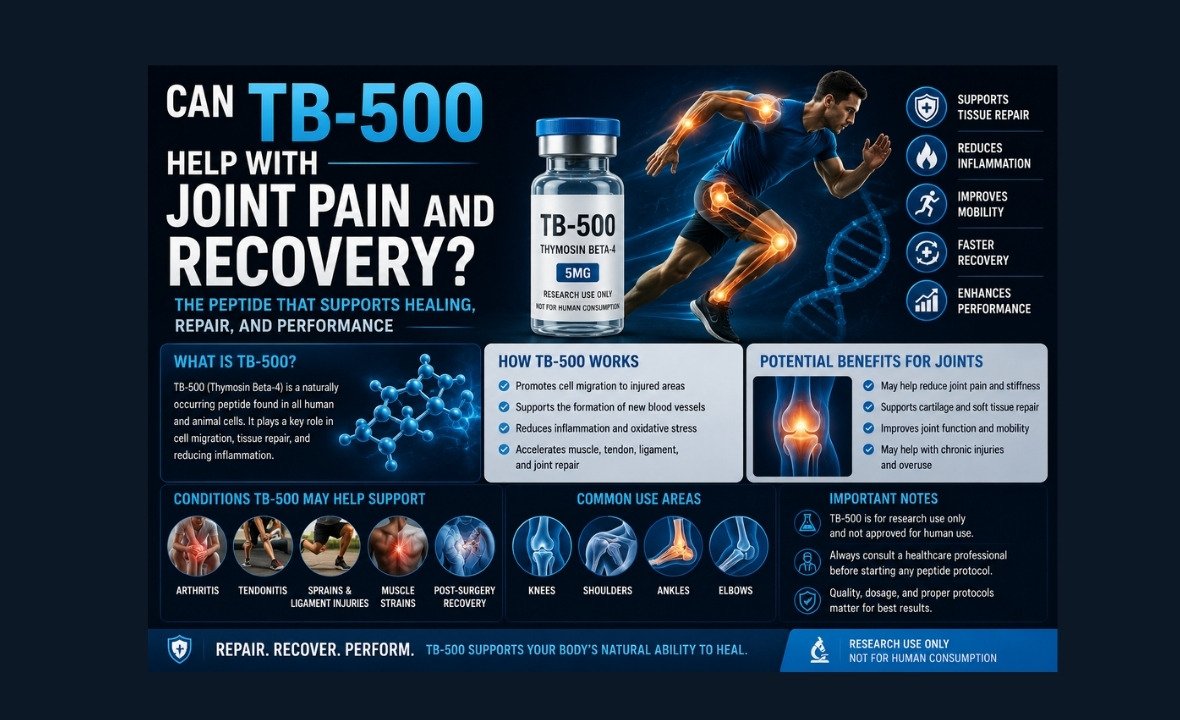
You may find TB-500 mentioned as a tool for joint pain and recovery because it can support tissue repair and reduce inflammation, especially in tendons and ligaments that heal slowly. Early research and many user reports suggest TB-500 can speed soft-tissue healing and ease joint-related discomfort, but evidence is not conclusive and more clinical trials are needed.
If you want faster recovery after a strain, surgery, or chronic joint irritation, TB-500 is worth learning about alongside standard treatments like physical therapy and doctor-guided care. Keep reading to see how it works, what the science and real-world experiences show, and what safety points to consider before trying it.
Key Takeaways
- TB-500 may help speed soft-tissue recovery and lower inflammation.
- Evidence mixes lab, animal, and anecdotal reports with limited clinical proof.
- Discuss potential benefits and risks with a qualified healthcare professional.
Understanding TB-500
TB-500 is a lab-made peptide that people use to help tissue repair and reduce inflammation. You’ll learn where it came from, how it works in the body, and how it compares to the natural protein thymosin beta-4.
Origins and Development
TB-500 is a synthetic fragment modeled after thymosin beta-4 (Tβ4), a natural protein involved in cell migration and wound healing. Researchers isolated the active region of Tβ4 and created TB-500 to concentrate those healing effects in a smaller, more stable molecule.
Early studies used animal models to test TB-500’s ability to speed recovery after tendon, muscle, and ligament injuries. Most published work so far comes from rodent and other preclinical studies rather than large human trials. Clinics and experimental protocols began adopting TB-500 for off-label use based on these animal results and anecdotal reports.
You should know it is not an FDA-approved drug for joint pain or tissue repair. That means dosing, safety monitoring, and long-term effects are not standardized. Many users and some clinicians treat it as an investigational therapy.
Biological Mechanisms
TB-500 acts on several cellular processes tied to repair. It promotes actin regulation, which helps cells change shape and move into damaged areas. This supports faster cell migration to wounds and injured tissues.
The peptide also seems to encourage angiogenesis — formation of new blood vessels — improving blood flow and nutrient delivery to damaged sites. Studies report reduced inflammatory markers and enhanced collagen organization, both important for structural healing.
Effects are largely observed after repeated dosing in animal studies, showing improved tissue strength and faster functional recovery. Direct human mechanism data remain limited, so most mechanistic conclusions are extrapolated from lab and animal research.
Comparison With Thymosin Beta-4
Thymosin beta-4 (Tβ4) is the full-length natural protein with broad biological roles. TB-500 is a specific, shorter fragment designed to mimic Tβ4’s key healing actions while improving stability and ease of synthesis.
Tβ4 has wider systemic functions and exists naturally in humans; TB-500 focuses on the peptide region tied to actin modulation and repair. In practice, TB-500 may be easier to dose and produce, but it may not replicate every regulatory or immune-related function of the full protein.
Clinical evidence for both is limited; most strong data come from preclinical studies. If you consider either, understand the difference: Tβ4 is the native protein with broader roles, while TB-500 is a targeted synthetic fragment used experimentally for tissue repair.
Joint Health and Injury Overview
Joint pain often comes from damage to cartilage, inflammation of the joint lining, or strain to surrounding tissues. You’ll learn what causes pain, how joints heal, and common treatments that aim to reduce pain and restore function.
Common Causes of Joint Pain
Wear-and-tear osteoarthritis breaks down cartilage over time and causes pain during movement. You might notice stiffness after rest, joint swelling, and reduced range of motion.
Inflammatory conditions like rheumatoid arthritis attack the joint lining. That leads to chronic swelling, warmth, and symmetrical joint pain in hands, wrists, or feet.
Acute injuries—sprains, ligament tears, and meniscal tears—cause sudden pain, instability, and often visible swelling. Sports or falls commonly cause these.
Overuse injuries, such as tendonitis or bursitis, come from repetitive motions. Pain is usually localized and worsens with the specific activity that caused it.
Infection and metabolic issues (gout) also cause joint pain but require specific tests and treatments because they can rapidly damage the joint if untreated.
Healing Processes in Joints
Cartilage has poor blood supply, so it heals slowly and often incompletely. Small cartilage defects may stabilize, but large tears rarely regenerate well on their own.
Synovial membrane inflammation can subside with removal of the cause, but chronic inflammation can erode cartilage over time. Early control of inflammation helps protect joint surfaces.
Ligaments and tendons have better healing if aligned and immobilized properly. You’ll see scar tissue form, which restores strength but may reduce flexibility.
Bone bruises and fractures follow predictable stages: inflammation, repair with new callus, then remodeling. Rehab influences the final joint function.
Biologic factors—growth factors, cell signaling, and blood flow—drive repair. Treatments that boost these factors aim to speed healing, though results vary by tissue type and injury severity.
Conventional Methods for Recovery
Rest, ice, compression, and elevation (RICE) reduce acute swelling and pain in early injury stages. You should limit weight-bearing when advised.
Medications include NSAIDs for pain and inflammation, acetaminophen for pain control, and corticosteroid injections for persistent intra-articular inflammation. Use under medical guidance.
Physical therapy improves strength, flexibility, and joint mechanics. Tailored exercise programs help restore function and reduce recurrence.
Bracing, orthotics, and assistive devices offload stress from the injured joint while you heal. Surgical repair or joint replacement is considered for severe structural damage or refractory pain.
Emerging options—platelet-rich plasma, stem cell therapies, and peptides—aim to enhance biologic repair but show mixed evidence; discuss risks and benefits with your clinician.
How TB-500 Interacts With Joints
TB-500 acts on several joint processes: it can reduce inflammatory signals, support cell migration and repair, and may affect fluid balance and cartilage environment. These actions come mainly from animal studies and lab work, not large human trials.
Effects on Inflammation
TB-500 appears to lower levels of pro-inflammatory molecules in injured tissue. In rodent models, treated joints showed reduced cytokines such as TNF-alpha and IL-6, which can cut swelling and pain signals when levels fall. You may notice less redness and decreased heat at the injury site in preclinical reports, but human data remain limited.
The peptide also seems to shift immune cell behavior. It can reduce neutrophil infiltration and encourage a more reparative macrophage profile in animal studies. That change supports a calmer inflammatory phase and may shorten the period of acute pain after injury.
Impact on Cellular Repair
TB-500 promotes cell migration and actin remodeling, which helps cells move into damaged areas. This effect supports tendon and muscle repair in animal experiments and could help joint tissues recover by speeding cell coverage of lesions.
The peptide also links to increased angiogenesis in injury models, supplying oxygen and nutrients to healing tissue. You may see faster closure of wound-like defects in preclinical work. Note that direct evidence of cartilage regrowth in humans is not established; most repair data come from soft-tissue and tendon models.
Influence on Synovial Fluid and Cartilage
TB-500 may alter the joint environment indirectly by improving tissue repair and reducing inflammation, which can normalize synovial fluid composition. Healthier tissue and less inflammation often mean lower protein leakage into the fluid and reduced enzymatic breakdown of lubricating molecules.
There is little direct evidence that TB-500 rebuilds cartilage matrix in humans. Animal studies report improved joint function and reduced cartilage damage after injury, but these findings do not prove cartilage regeneration in clinical settings. If you consider TB-500, expect potential improvements in pain and mobility driven more by reduced inflammation and better soft-tissue repair than by proven cartilage regrowth.
Research on Recovery Speed
Studies show TB-500 speeds tissue repair in animals, while human evidence is limited to small case reports and clinic series. The strongest data come from lab and rodent models showing faster healing, reduced inflammation, and more blood vessel growth in injured tissues.
Findings From Animal Studies
Animal models, especially rats and mice, show clearer effects on recovery speed. In a meniscal tear model, rats given TB-500 subcutaneously at set doses healed faster and had less joint inflammation than controls. Other studies report improved tendon and muscle repair, with earlier return of strength and range of motion.
Mechanisms seen in animals include increased cell migration, actin regulation, and angiogenesis that deliver more nutrients to injured tissue. Dosing in studies tends to be higher per kilogram than typical human reports, and treatments are controlled in timing and frequency. That makes direct dose translation to humans uncertain.
Emerging Human Case Reports
Human evidence consists mainly of case reports, small clinic series, and anecdotal accounts from athletes and patients. Reports describe faster pain relief and improved mobility after TB-500 injections for tendon or ligament injuries, but these accounts lack randomized controls and often combine TB-500 with other therapies like PRP or physical rehab.
You should note variability in reported dosing, route (subcutaneous vs. intramuscular), and treatment length. Adverse events are infrequently reported in these series, but systematic safety data are missing. This weak evidence means human claims remain provisional and need controlled trials.
Interpretation of Clinical Data
When you look at the whole clinical picture, animal studies provide plausible mechanisms, but human data are low quality. Case reports suggest potential benefit, yet they cannot prove cause and effect because of small samples and possible placebo or concurrent-treatment effects.
For clinical decisions, weigh the biologic rationale against the lack of randomized trials and clear safety profiles. If you consider TB-500, do so under medical supervision, track objective outcomes (pain scores, range of motion, imaging), and be cautious about dosing extrapolated from animal research.
User Experiences and Anecdotal Evidence
Many users report faster pain relief and improved range of motion after starting TB-500. Others describe gradual tissue recovery when combined with physical therapy and rest.
Athletes’ Perspectives
You’ll find athletes saying TB-500 helped them return to training sooner after strains or tendon irritation. Several track athletes and weekend warriors report reduced soreness within 1–3 weeks of using small subcutaneous doses alongside rehab.
Some athletes emphasize careful dosing and cycling to avoid side effects like temporary fatigue or localized irritation. You should expect varied results: some see clear gains in flexibility and fewer flare-ups, while others notice little change. Most accounts highlight using TB-500 as one part of a rehab plan, not a lone cure.
Rehabilitation Success Stories
You may read accounts from people who used TB-500 after surgeries or chronic tendon injuries and saw steady improvement in pain and function. Reports often mention combining injections with guided physical therapy, anti-inflammatory measures, and activity modification.
Many describe progress over 4–12 weeks: less morning stiffness, better joint mobility, and faster tissue repair when they followed a structured rehab program. Be aware these are personal reports; outcomes depend on injury type, treatment adherence, and medical oversight.
Safe Usage and Practical Considerations
You need clear guidance on dose, likely side effects, and legal status before considering TB-500. Follow safe sourcing, medical oversight, and realistic expectations to reduce risk.
Recommended Dosage and Administration
Typical protocols come from clinical reports and user data, not official guidelines. A common approach starts with a loading phase of 2–5 mg injected subcutaneously two to three times per week for 2–4 weeks. After that, a maintenance phase of 2–5 mg once weekly for 4–8 weeks is often used. Doses vary by body weight and injury severity.
Use sterile technique: clean the injection site, use single-use syringes, and rotate sites. Store powder refrigerated and reconstitute with bacteriostatic water per product instructions. Always document dose, date, and site. Discuss any plan with a licensed clinician and get baseline labs if advised.
Potential Side Effects
Common short-term effects include mild injection-site pain, redness, or itching. Some people report headache, dizziness, or temporary fatigue. Serious adverse events are poorly characterized because human safety data are limited.
TB-500 can affect cell migration and blood vessel growth in tissues. That raises theoretical risks like abnormal scarring or promoting growth of existing tumors. If you have cancer, active infection, or immune disorders, avoid use unless a specialist clears you. Stop and seek medical care for severe swelling, fever, or unexplained symptoms.
Legal and Regulatory Status
TB-500 is not approved by major regulators for human medical use. It is often sold as a research chemical or peptide for veterinary use. That means product quality and labeling can vary widely.
In sports, many anti-doping agencies ban peptide use in competition. If you compete, check your federation’s rules before using TB-500. Also verify local laws: possession or distribution rules differ by country and state. Work only with licensed providers and pharmacies when possible to reduce legal and safety risks.
Limitations and Areas for Further Study
TB-500 shows promise for tissue repair, but the evidence has gaps and many unknowns. You should weigh uncertain benefits against limited human safety data and variable dosing when considering it.
Gaps in Current Research
Most studies use animal models, not people. Rodent experiments report improved healing after meniscal or tendon injury, but animal doses (for example, 6 mg/kg twice weekly in one rat study) do not translate directly to humans. Human clinical trials are small, often uncontrolled, or absent, so you cannot rely on consistent efficacy or safety profiles.
Long-term safety data are missing. There is little information on chronic use, cancer risk, or immune effects. Comparative trials versus standard treatments (NSAIDs, physical therapy, surgery) are scarce, so you can’t judge how TB-500 fits into real-world care pathways.
Factors Affecting Effectiveness
Dose, timing, and delivery route likely matter. Studies vary: subcutaneous injections are common in animals, but human protocols differ widely. You should note that inconsistent dosing makes it hard to predict outcomes or side effects.
Patient factors change results too. Age, severity of joint damage, concurrent medications, and metabolic differences can alter response. Combination use with other peptides or therapies adds more variables and possible interactions you won’t find well-studied yet.
- Key unknowns you should watch:
- Optimal dose and schedule for humans
- Best delivery method (injection site, frequency)
- Interaction with other treatments and comorbid conditions
Conclusion
TB-500 shows promise for helping tissue repair and easing inflammation based on lab and animal studies. You may see faster soft-tissue healing and improved mobility in specific injuries, like tendon or muscle damage.
Human evidence remains limited and mixed. You should treat current findings as preliminary and avoid assuming TB-500 is a proven therapy for chronic joint disease.
If you consider TB-500, weigh potential benefits against unknown long-term safety and legal or regulatory issues. Discuss options with a licensed clinician who knows peptide therapies and can monitor dosing and side effects.
Practical steps you can take:
- Talk with your doctor about evidence and risks.
- Prefer supervised care in regulated settings.
- Monitor symptoms and any adverse effects closely.
You can combine peptide therapy with proven measures like physical therapy, exercise, weight management, and standard medical treatments. That approach gives you a safer, more evidence-based path to better joint function.
Frequently Asked Questions
This section answers common practical questions about TB-500 use for joint and soft-tissue recovery. You’ll find details on side effects, dosing, combining with BPC-157, evidence for tendon/ligament healing, and safety concerns.
What are the most common side effects reported with TB-500 use?
Users most often report mild local reactions. Expect redness, pain, or swelling at injection sites for a short time.
Some people note temporary fatigue or headache after dosing. Serious adverse events are uncommon in available reports, but data are limited.
How is TB-500 typically dosed for injury recovery, and what factors influence dosing?
Common protocols start with a loading phase of about 2–5 mg per week for 2–4 weeks. Providers then switch to a maintenance dose of 0.5–2 mg weekly or every other week, depending on response.
Dosing depends on injury type, severity, body weight, and whether you use injections or topical routes. Clinician supervision and monitoring guide adjustments.
Is combining TB-500 with BPC-157 common, and how are dosing protocols usually structured?
Yes. Clinicians often combine TB-500 with BPC-157 to target different healing pathways. TB-500 focuses on cell migration and angiogenesis; BPC-157 targets gut and tendon repair and inflammation.
Typical combined protocols use TB-500 at the doses above while adding BPC-157 at 200–500 mcg once or twice daily for several weeks. Tailor timing and length to your injury and medical advice.
What are the key pros and cons of TB-500 for athletic recovery and soft-tissue support?
Pros: Reported faster functional recovery, reduced scar formation, and improved flexibility in tendons and muscles. It may help post-surgical healing when given early.
Cons: Human clinical data remain limited; most evidence comes from animal studies and anecdotal reports. Cost, need for injections, and uncertain long-term safety are practical downsides.
What evidence exists that TB-500 may support tendon or ligament healing?
Animal studies show faster tissue repair, reduced scar tissue, and improved architecture after TB-500 treatment. Some clinic reports and small case series describe reduced pain and better range of motion in tendinopathy.
High-quality randomized human trials are sparse. Evidence suggests potential benefit, but definitive proof in large human studies is still lacking.
Are there any safety concerns, contraindications, or interactions to consider before using TB-500?
Avoid use if you have active cancer or suspicious lesions, since TB-500 can promote cell migration and blood vessel growth. Pregnant or breastfeeding people should not use it due to unknown risks.
Discuss current medications and health conditions with a clinician. Interactions are not well studied, so medical supervision and regular monitoring are important.