Address
30 N Gould St.
Suite R, Sheridan, WY 82801, USA

How Long Does TB-500 Take to Work? Timeline, Effects, and Expected Results

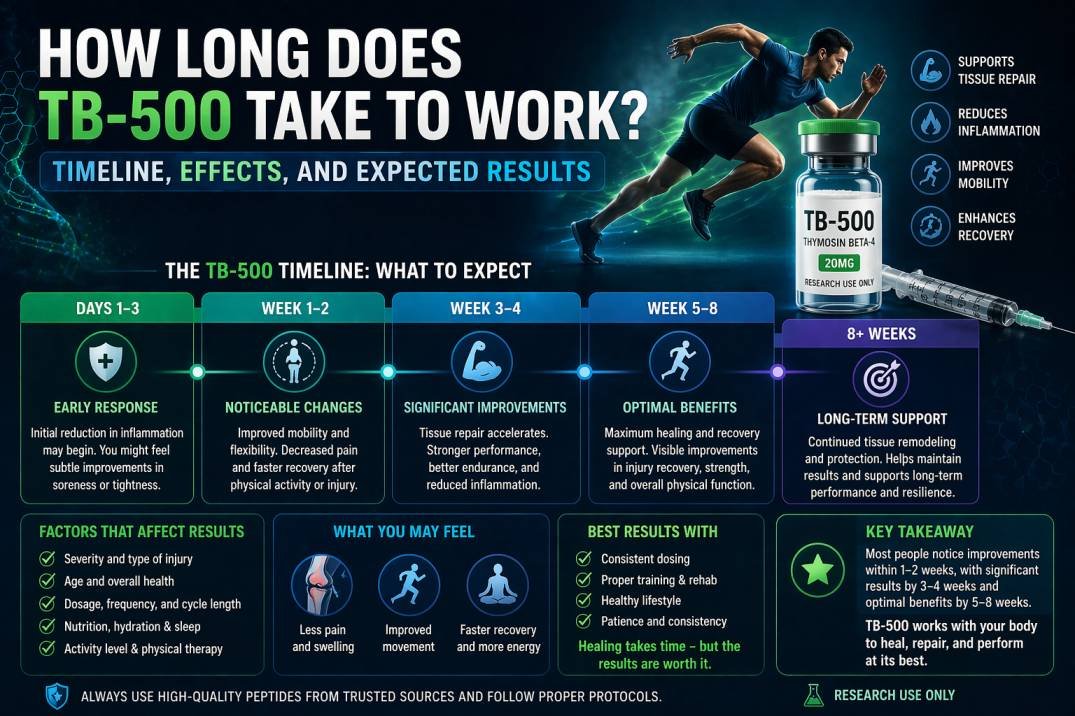
If you want faster recovery, TB-500 can start changing cell behavior within 48–72 hours, and many people notice pain or inflammation easing within a week, while tendon or ligament repair often takes 4–8 weeks. You’ll see faster, clearer effects with acute muscle injuries; chronic issues usually need more time and consistent dosing.
Think about what you want TB-500 to do and how soon you need results. Track pain, swelling, and function week by week so you can spot real progress and judge whether to adjust your plan or check with a medical professional.
Key Takeways
- Expect some signs of improvement within days to a week for acute issues.
- Full repair for tendons and chronic conditions commonly needs several weeks.
- Monitor symptoms closely and seek medical advice if progress stalls.
How Long Does TB-500 Take to Work?
You can expect early cellular effects within days, noticeable pain or mobility changes in 1–4 weeks, and clearer tissue-level improvements over 4–8 weeks depending on injury type and dosing. Time to effect depends on injury severity, dose schedule, and your individual healing capacity.
Biological Role of TB-500
TB-500 is a synthetic fragment of thymosin beta‑4 that helps control cell movement and actin dynamics. It does not directly build tissue; it changes how cells behave by increasing expression of actin and proteins that guide cell migration.
You may see molecular signals shift within 48–72 hours after dosing. These early shifts support later repair by making cells more mobile and responsive to repair cues.
Because it acts systemically, TB-500 can affect multiple tissues at once. That means effects may appear faster for acute muscle strains and slower for deep tendon or chronic issues.
Interaction With Cellular Processes
TB-500 upregulates actin and enhances chemotaxis, so cells move into injury sites more efficiently. This improves cell recruitment of fibroblasts, endothelial cells, and immune cells needed for repair.
You may notice reduced inflammation markers after a week or two as immune cell behavior changes. Angiogenesis (new blood vessel formation) also improves over weeks, helping deliver oxygen and nutrients to the damaged area.
Dose timing matters: many protocols use a short loading phase to boost early cellular activity, then a maintenance phase to sustain those processes while tissue remodeling occurs.
Influence on Tissue Repair
For acute muscle injuries, people often report pain relief and improved mobility within 7–14 days. Tendon and ligament healing typically takes longer; meaningful structural gains usually appear in 4–8 weeks.
Chronic degenerative problems may need repeated cycles over months for consistent benefit. Your age, circulation, and concurrent therapies (like physical therapy) change how fast you see results.
Expect variability: some users see quick symptom improvement, while others need longer dosing and supportive care to reach measurable tissue repair.
Typical Onset Timeline
You can expect fast cellular changes, measurable short-term improvements in inflammation and pain, and slower structural repair in tendons, ligaments, and muscle. Time to noticeable benefit depends on dose, injury type, and baseline health.
Immediate Physiological Responses
Within hours to a few days after a dose, TB-500 can change cell behavior at the injury site. You may see reduced acute inflammation markers and altered cell migration because TB-500 influences actin dynamics and promotes endothelial cell movement. That effect can lower redness and swelling faster than no treatment.
Circulation-related effects can begin quickly too. TB-500 may support new capillary growth in the area, improving oxygen and nutrient delivery within days. These are molecular and cellular shifts; you likely won’t feel major strength gains yet, but pain at rest or sharp inflammatory pain can lessen.
Short-Term Changes Noted
From about one to four weeks, you often notice clearer clinical signs: reduced pain with activity, less morning stiffness, and greater range of motion. For muscle strains, tenderness and bruising typically fade in this window. For tendons and ligaments, function improves more slowly but you may start to tolerate higher loads.
Expect variation by tissue: muscle responses trend faster than tendon or ligament responses. Dosing also matters — many protocols use a loading phase in week one to accelerate these short-term gains. If you combine rehabilitation exercises, improvements usually appear sooner and are more robust.
Long-Term Effects Observed
Over one to three months and beyond, TB-500’s main contribution shows as structural repair and stronger tissue remodeling. Tendons and ligaments, which heal slowly because they have limited blood flow, may show clearer tensile strength gains in this period. Complete remodeling can take several months.
Maintenance dosing or repeated cycles often coincide with continued functional gains and lower re-injury rates reported anecdotally. Monitor healing with objective measures — strength tests, range of motion, and imaging when available — because subjective feeling can lag behind true tissue recovery.
Factors Influencing Response Time
Response time varies with how you dose and give the peptide, your baseline health and fitness, and other conditions or treatments that affect healing. These key points determine whether you see changes in days, weeks, or months.
Dosage and Administration Protocols
Dose size and how you give TB-500 strongly affect speed of effect. Many research protocols use a short “loading” phase — for example, higher daily or every-other-day injections for 1–2 weeks — followed by a lower maintenance dose. Higher initial doses often produce earlier functional changes, such as reduced pain or improved mobility, while lower doses may take longer.
Route of administration matters. Subcutaneous or intramuscular injection delivers peptide into tissues and tends to act faster than topical application for deep injuries. Frequency and total cumulative dose also change outcomes; inconsistent dosing can blunt response. Always follow safe handling and dosing guidance in research settings.
Individual Health Status
Your age, nutrition, and baseline fitness affect how fast TB-500 works. Younger people with good protein intake and active rehab tend to recover faster because cell repair and collagen synthesis run more efficiently. Poor nutrition, low protein, or vitamin deficiencies slow tissue rebuilding and delay visible improvement.
Activity level matters too. Controlled loading of the injured area with progressive rehab helps the peptide-directed repair become functional. Excessive rest or continued overload can mask benefits. Finally, genetics and metabolic rate influence how quickly cells migrate and new blood vessels form, so expect variation between individuals.
Comorbidities and Concurrent Therapies
Existing medical conditions change response patterns. Diabetes, vascular disease, or autoimmune disorders commonly slow healing and may reduce TB-500’s observable effects. Chronic inflammation or impaired circulation limits nutrient delivery and cell migration, so you may need more time to notice improvement.
Other treatments interact with response. Anti-inflammatory drugs, corticosteroids, or anticoagulants can alter tissue repair dynamics and either delay or complicate outcomes. Combining TB-500 with active physical therapy, controlled mechanical loading, or other regenerative approaches (like PRP) may speed functional gains when coordinated properly. Always consider interactions and coordinate care with a clinician.
Variability in User Experiences
Individual responses to TB-500 vary by injury type, baseline health, and how the peptide is used. Expect differences in speed and degree of improvement depending on whether you have an acute strain, tendon damage, or chronic inflammation.
Differences in Clinical Versus Anecdotal Data
Clinical data for TB-500 is limited and often comes from small lab or animal studies. Those studies show biological effects like increased cell migration and actin regulation within 48–72 hours, but human trials with large sample sizes and standardized endpoints are scarce. That means you should weigh controlled-study results more heavily than forum reports.
Anecdotal reports describe visible symptom changes in 7–14 days for muscle strains, and 4–6 weeks for tendon or ligament issues. Individual reports can be biased by dose, injection technique, other treatments, and placebo effects. Track objective markers—pain scores, range of motion, and imaging—so you can compare what you feel to measurable change.
Impact of Age and Activity Level
Your age affects tissue repair capacity. Younger people typically have faster cell turnover, better blood flow, and stronger immune responses, so you may see improvement sooner. If you are over 50, expect slower tissue remodeling and longer timelines for tendon or chronic injuries.
Your activity level also matters. If you train hard or return to intense activity too quickly, you may blunt TB-500’s benefits and prolong recovery. Conversely, combining appropriate physical therapy, controlled loading, and rest can speed functional gains. Adjust dosage timing and rehab plans to your daily demands and recovery capacity.
Monitoring Progress and Effectiveness
Track pain, range of motion, and visible wound or swelling changes. Use simple tests and a log to compare baseline and ongoing measures every few days and weekly.
Identifying Early Signs of Improvement
Look for reduced pain at rest and during basic movement within 4–7 days for acute wounds or 1–2 weeks for muscle injuries. Notice smaller, flatter wounds, less redness, and reduced warmth around the injury. Pay attention to how much force and motion you can tolerate—if you can bend, lift, or walk with less discomfort, that is a clear sign.
Also watch for improved sleep and lower need for pain meds. Early gains are often subtle; record the first day you notice change so you can track progression over weeks. If you see no improvement after 2–4 weeks for a soft-tissue injury, re-evaluate with a clinician.
Recommended Assessment Methods
Use a pain scale (0–10) and log scores daily, noting activity that caused pain. Measure joint or limb range of motion with a goniometer or simple tape measure and record at set intervals (e.g., baseline, week 1, week 2, week 4). Take photos of wounds or swelling under consistent lighting and angle every 3–7 days.
Include objective tests: timed walk or lift repetitions, strength tests with a hand dynamometer, or clinician-performed ultrasound if available. Share your log with your healthcare provider and adjust the plan based on their advice. Stop or seek help if symptoms worsen, show signs of infection, or if function does not improve as expected.
Potential Reasons for Delayed Results
Delayed response can come from health factors that affect healing or from mistakes in how the peptide was stored and handled. Both can slow tissue repair, reduce effective dose, or change how your body uses TB-500.
Underlying Health Conditions
If you have diabetes, poor blood flow, or autoimmune disease, tissue repair slows and TB-500 may take longer to show effects. High blood sugar and chronic inflammation blunt cell migration and new tissue formation, so you might not notice improvement until those issues are controlled.
Medications matter too. Steroids, some immunosuppressants, and drugs that thin blood can interfere with healing or peptide action. Age also plays a role: older adults typically have slower cell turnover and may need more time to see gains.
Tell your clinician about chronic conditions and meds. Managing blood sugar, improving circulation, and adjusting interfering drugs (with medical advice) can help TB-500 work closer to expected timelines.
Improper Storage or Handling
TB-500 is sensitive to heat and repeated freeze-thaw cycles. If the vial sits at room temperature too long, or if it thaws and refreezes, the peptide can degrade and lose potency. That weakens each dose and delays results.
Reconstitution errors also matter. Using incorrect solvent volume or contaminated water for injection can change concentration and safety. Always use sterile technique, clean syringes, and follow the manufacturer’s reconstitution steps.
Check the vial for cloudiness or particles. Store frozen when recommended, protect from light, and use doses within the stated time after reconstitution to maintain effectiveness.
When to Consult a Medical Professional
If you have severe pain, sudden swelling, fever, or signs of infection at an injection site, stop using TB-500 and seek medical care right away. These signs can mean a serious infection or another urgent complication that needs prompt treatment.
Talk with a doctor before starting TB-500 if you have a history of cancer, blood clotting disorders, autoimmune disease, or are pregnant or breastfeeding. Those conditions can change risks and affect whether TB-500 is safe or appropriate for you.
If you notice no improvement after several weeks, or your symptoms get worse instead of better, consult a clinician. A health professional can review your diagnosis, check for other causes, and suggest safer or more effective treatments.
If you are using other medications, supplements, or experimental therapies, discuss TB-500 with your prescriber. Drug interactions and overlapping effects can cause unexpected problems, and your provider can help manage timing and dosing.
Keep records of doses, injection sites, and any side effects to bring to appointments. Clear information helps clinicians make better decisions about testing, imaging, or referral to a specialist.
Frequently Asked Questions
You can expect early signs like reduced inflammation or less pain within days for minor wounds, and clearer tissue repair in weeks for bigger injuries. Dosing, injury type, and whether you combine other peptides change the timeline and results.
When should you expect to notice changes after starting TB-500?
For acute, small injuries you may notice reduced swelling or minor pain relief within 4–7 days.
More meaningful improvements in strength, range of motion, or visible tissue repair usually appear in 2–6 weeks.
Chronic or long-standing conditions often need 8–12 weeks before you see full effects.
Individual responses vary, so track changes week by week.
What factors influence how fast TB-500 produces noticeable effects?
The type and severity of your injury matter most; small cuts heal faster than torn muscle or ligament.
Dose, frequency, and how long you stay on a cycle also change speed of response.
Your age, overall health, nutrition, sleep, and whether you use other therapies (like physical therapy) affect healing.
Product quality and correct storage and reconstitution can also change how well the peptide works.
What is a typical TB-500 dosing schedule per week for recovery support?
A common loading phase uses 2–2.5 mg two times per week for the first 2–3 weeks.
After loading, a maintenance phase often uses 2–2.5 mg once per week for 4–8 weeks.
Some protocols split doses into smaller injections across the week for steadier levels.
Always follow guidance from a licensed clinician when possible.
How do people calculate TB-500 dosage based on body weight and goals?
Many users start with a fixed mg dose rather than strict mg/kg math, then adjust by response.
For aggressive recovery, people use higher loading doses; for maintenance they use lower weekly amounts.
If you prefer weight-based math, practitioners sometimes use ranges like 0.02–0.04 mg per kg per week as a rough reference.
Use clinical advice to tailor dosing to your goals and safety needs.
What daily dosage is commonly used when stacking BPC-157 with TB-500 for an injury?
When stacking, TB-500 is usually dosed as above (weekly loading then maintenance), not daily.
BPC-157 is commonly given daily at 250–500 mcg per day, depending on injury and route.
People often run TB-500 weekly and BPC-157 daily for 4–8 weeks to combine systemic and local healing actions.
Adjust both under medical supervision.
Is TB-500 considered effective for tendon and ligament healing?
Preclinical and anecdotal reports show TB-500 can promote cell migration and tissue repair, which may help tendons and ligaments.
Many users report improved pain and function in 2–6 weeks for tendon or ligament injuries.
High-quality human data remain limited, so consider TB-500 as a supportive therapy alongside rehab and proven treatments.