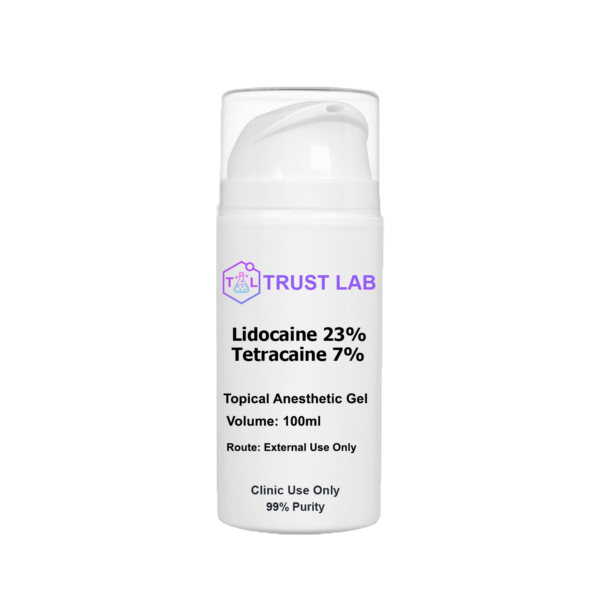
LT 23 7 (Lidocaine 23% + Tetracaine 7%) Numbing Gel
For Research Use Only •
$230.00Original price was: $230.00.$175.00Current price is: $175.00.
LT 23 7 is a compounded, high-strength topical anesthetic formulated for temporary numbing of the skin prior to minimally invasive procedures. It combines two powerful local anesthetics:
Lidocaine (23%) – a rapid-onset amide-type anesthetic
Tetracaine (7%) – a long-acting ester-type anesthetic
Together, they provide deep dermal anesthesia, suitable for cosmetic, dermatologic, laser, tattoo, or aesthetic procedures. The dual-mechanism blocks sodium channels in peripheral nerves, preventing pain signal transmission.
LT 23 7 is a high-potency topical anesthetic gel intended for professional, in-office procedures. It should be applied only to intact skin, and only by trained professionals. A small amount (typically 0.5–2g) is applied in a thin layer to the treatment area, depending on the size and sensitivity of the region.
Standard application protocol:
Apply a uniform layer to clean, dry skin
Cover with occlusion film (if desired) for deeper penetration
Leave on for 15–30 minutes, depending on procedure depth
Remove excess thoroughly before starting the procedure
Do not exceed 2g per 10cm² of skin. Avoid prolonged exposure (>60 minutes) or covering large surface areas at once, as systemic absorption of anesthetics may increase risk.
⚠️ Not for use on broken, inflamed, or bleeding skin. Not for ophthalmic, intranasal, or internal use.
LT 23 7 is a compounded, high-strength topical anesthetic formulated for temporary numbing of the skin prior to minimally invasive procedures. It combines two powerful local anesthetics:
Lidocaine (23%) – a rapid-onset amide-type anesthetic
Tetracaine (7%) – a long-acting ester-type anesthetic
Together, they provide deep dermal anesthesia, suitable for cosmetic, dermatologic, laser, tattoo, or aesthetic procedures. The dual-mechanism blocks sodium channels in peripheral nerves, preventing pain signal transmission.
Lidocaine and tetracaine both work by blocking voltage-gated sodium channels in the peripheral nervous system. This inhibits the generation and conduction of nerve impulses, resulting in a temporary loss of sensation at the application site.
Lidocaine: Rapid onset, medium duration
Tetracaine: Slower onset, longer duration, enhances depth of penetration
Their synergistic action provides both fast-acting and sustained anesthetic effect.
When used appropriately, LT 23 7 is generally safe and effective. However, topical anesthetics can be absorbed systemically in large quantities or over prolonged periods.
Possible side effects:
Mild skin irritation, itching, or redness
Temporary blanching or erythema at application site
Numbness or tingling persisting beyond removal
Rare: headache, dizziness, or palpitations (if systemic absorption occurs)
Allergic reactions (rare, more common with tetracaine)
Always perform a patch test on new users and avoid use on compromised skin.
Use of high-concentration topical anesthetics in pregnancy should be limited to medically necessary procedures under supervision. While lidocaine is Category B, tetracaine lacks sufficient safety data. Avoid use during breastfeeding on areas that may contact the infant (e.g., chest, breast).
LT 23 7 is not intended for pediatric use. High concentrations of lidocaine and tetracaine can lead to serious adverse effects in children, including methemoglobinemia or CNS toxicity. Use only under pediatric supervision, and never on infants.
While lidocaine and tetracaine are FDA-approved active ingredients, this compounded 23%/7% formulation is not FDA-approved as a commercial drug. It is made under licensed compounding pharmacy protocols and used under physician or practitioner direction.